Cole-Frieman & Mallon 2026 Q3 Update

October 8, 2026

Clients, Friends, and Associates:

With the third quarter of 2026 behind us, we highlight below several noteworthy industry updates. As always, we aim to provide a brief but informative overview. If you have any questions on these items or related matters, please contact us.

CFM Items

CoinAlts Fund Symposium – October 14. We are proud to return as a Premier Sponsor of the CoinAlts Fund Symposium, alongside MG Stover, Harneys, and KPMG. The event takes place at the Hyatt Regency Hotel in San Francisco on October 14, 2026. Join us for expert panels, leading speakers, and insights into this rapidly evolving industry. For more information, visit https://coinalts.xyz/.

Our People. We are pleased to welcome two new additions to our team: partner Malhar Oza, who returned to the Investment Funds practice from Finality Capital Partners Management LLC, and Meza Plazantia, who joins the firm as a finance assistant. Please join us in welcoming Malhar and Meza!

****

SEC Matters

SEC’s 2026 Regulatory Agenda Targets Private Markets and Crypto. On July 7, 2026, the SEC released its 2026 rulemaking agenda, comprising 38 items (36 at the proposed rule stage) focused on capital formation, private market access, and crypto asset regulation. Key proposals include:

  • Changes to the accredited investor definition and exempt offering pathways.
  • Investment Advisers Act and Investment Company Act amendments permitting broader use of performance fees and allowing registered funds to offer retail investors exposure to private markets.
  • Crypto custody rules for advisers and registered funds.
  • A refreshed finders’ exemption for unregistered capital-raising intermediaries.
  • Expanded Rule 144 safe harbor for resales of restricted securities.
  • Changes to the pay-to-play rule’s two-year “cooling off” period restricting adviser compensation from public pension plans following certain political contributions.

This is one of the most forward-thinking SEC agendas for fund managers in recent memory, addressing longstanding ambiguities in an evolving industry. The details could shift materially before adoption, and we will monitor each proposed rule as it is released.

Form PF Compliance Delayed Again to July 2027. On August 31, 2026, the SEC and CFTC delayed the compliance date for the 2024 Form PF amendments for the fourth time, moving it from October 1, 2026, to July 1, 2027. The extension gives the agencies time to finalize a separate proposal that would raise the general Form PF filing threshold from $150 million to $1 billion in private fund assets under management and the large hedge fund adviser threshold from $1.5 billion to $10 billion. If not finalized, the 2024 amendments take effect as adopted on July 1, 2027. The agencies estimate the threshold increase would eliminate Form PF obligations for approximately 43% of current filers and move roughly two-thirds of current large hedge fund advisers into the lighter standard filing tier. Managers should continue reporting under existing Form PF rules while the proposal is under review.

SEC Clarifies When Swaps and Activist Investment Vehicles Trigger Disclosure. On July 9, 2026, the SEC’s Division of Corporation Finance issued interpretations addressing when a cash-settled swap creates beneficial ownership under Section 13(d), and when investors in an activist investment vehicle must be named in public filings:

  • A cash-settled total return swap that references only underlying stock and conveys no voting or investment power does not, standing alone, create beneficial ownership or trigger a 13D filing. However, beneficial ownership may exist if the holder knew, or was reckless in not knowing, that the arrangement created a false impression of a purely economic position (for example, by directing the counterparty’s vote or prearranging acquisition of the hedge shares).
  • When an entity is formed to acquire a specific issuer’s securities and pursue an activism campaign, and investors are informed of the entity’s target and purpose in advance, the entity’s Schedule 13D must disclose its investors’ identities under Item 3, regardless of contribution size. This narrow guidance does not extend to a general-purpose or diversified fund, even if that fund later takes an activist position.

****

Digital Asset Matters

SEC Proposes Amendments and New Rules for the Custody of Crypto Assets. On October 1, 2026, the SEC proposed amendments to the Investment Advisers Act custody rule and new custody rules under the Investment Company Act. If adopted, the proposal would allow investment advisers to self-custody client crypto assets, including those of regulated funds, and would add state trust companies as a new category of permitted custodian for crypto assets, subject to specified conditions. Key elements include:

  • Self-custody. An adviser could self-custody a crypto asset only if it first determines in writing that no qualified custodian is available to hold it and repeats that determination each quarter.
  • Safeguarding. The adviser would also need to have, and document, the expertise and systems to safeguard each asset, review those systems every year, obtain internal control reports, send clients quarterly account statements, and agree with each client in writing to treat the self-custodied crypto asset as a “financial asset” under state law.
  • State trust company custody. Before using a state trust company, advisers and funds would need a reasonable basis, both initially and every year after, for believing that the company is authorized by its state banking authority to custody crypto assets and maintains adequate safeguarding policies, and they would also need to review its audited financial statements and internal control reports and confirm that client assets are kept separate from the company’s own assets.
  • Form ADV Disclosure. The proposal would also add new Form ADV disclosures about crypto self-custody and state trust company custodians.

Many of the proposal’s key elements are consistent with the positions CFM advanced in its meetings with the SEC and in the 2017 and 2018 recommendations the firm made to the SEC, when concerns about the custody of crypto assets were first emerging. These rules are only proposals at this stage. The comment period will remain open for 60 days following the publication of the SEC’s proposing release in the Federal Register.

SEC Issues Five-Year “Innovation Exemption” Granting Relief for Tokenized Stock Trading. On September 17, 2026, the SEC issued a conditional exemptive order (the “Innovation Exemption”), effective immediately, that creates a new “Tokenized Securities Venue.” A TSV may run permissioned automated market makers in tokenized National Market System stock (i.e., stocks listed on regulated major U.S. exchanges) without registering as a national securities exchange or as an alternative trading system, and firms that commit proprietary capital to its liquidity pools are relieved of the dealer registration requirement. The relief is built around automated market maker liquidity pools, so a platform that matches orders through a central limit order book would not qualify. Because the relief works on notice rather than approval, a venue meeting the conditions may begin trading 30 calendar days after publishing its notice, and must notify the SEC within one business day of publishing. For additional information, please view our related website post.

SEC Proposes “Regulation Crypto Assets,” a New Offering Framework for Crypto Investment Contracts. On August 18, 2026, the SEC proposed Regulation Crypto Assets, a framework for offerings of “covered investment contracts” (i.e., investment contracts involving a crypto asset that is not itself a security). The proposal creates two Securities Act exemptions: a start-up exemption for raises of up to $5 million over a rolling four-year period, with no required audited financial statements, periodic reporting, resale restrictions, or accredited investor limits; and a two-tier fundraising exemption for raises of up to $75 million per 12-month period, subject to financial statements (audited above certain thresholds) and ongoing reporting. Both exemptions require a U.S.-organized issuer with a majority of its principals and directors being U.S. citizens or residents, and whose assets and operations are predominantly domestic.

The exemptions would also preempt state securities law and create a safe harbor removing crypto assets from securities law treatment once the issuer completes or ceases the promised development work and post-certifies on Form TR. However, two features warrant monitoring: the U.S. organizational requirement, which could effectively exclude non-U.S. managers and projects structured through offshore foundations, and the state law preemption, without which issuers relying on these exemptions remain subject to state blue sky laws.

CME Sues CFTC Over Classification of Crypto Perpetual Futures. On June 18, 2026, CME Group sued the CFTC and its Chairman in the U.S. District Court for the District of Columbia, challenging the CFTC’s approval of KalshiEX’s bitcoin perpetual futures contract (BTCPERP) and a related policy statement permitting designated contract markets to list similar digital-asset perpetuals as futures. On September 2, 2026, the CFTC moved to dismiss, arguing that CME lacks standing.

CME argues that perpetual contracts, which provide continuing exposure without a maturity date, should be classified as swaps, seeking to vacate the Kalshi approval and the policy statement. If the case proceeds and CME prevails, the ruling could have several significant implications:

  • Counterparties trading swaps above the registration threshold would need to register as swap dealers, incurring additional obligations.
  • Margin and clearing would shift from standard clearinghouse futures margin to more expensive swap-style margin.
  • Trade reporting would move from exchange-level reporting to swap data repository reporting.

Separately, futures receive favorable tax treatment under IRC Section 1256 that swaps do not, which could affect the taxation of gains and losses from these instruments.

SEC Staff Confirms Blockchain Digital Attestations Can Satisfy Rule 506(c) Verification for Tokenized Offerings. On July 21, 2026, SEC staff confirmed that an issuer conducting a Rule 506(c) offering of a tokenized security may satisfy the accredited investor verification requirement through a digital attestation built into the token itself. This extends a related 2025 no-action letter, which permitted reliance on a high minimum investment amount and a written investor representation in lieu of tax or banking documentation. That representation, covering accredited investor status and confirming no third-party financing, may now be captured programmatically through the token protocol at subscription rather than by separate signed documentation. The underlying requirements are unchanged: issuers must maintain adequate verification records, meet minimum investment amount thresholds, and have no actual knowledge that an investor’s representation is false.

****

Tax Matters

Limited-Partner SECA Exception Reaches Three Circuits in Soroban, Denham, and Sirius Solutions. On August 12, 2026, the Fifth Circuit withdrew its January 2026 opinion in Sirius Solutions, L.L.L.P. v. Commissioner and issued a revised opinion holding that a “limited partner” under IRC Section 1402(a)(13) is one who plays “no significant role in managing or running a business.” The court rejected the Tax Court’s “passive investor” standard from Soroban Capital Partners LP v. Commissioner, replacing a bright-line status test with a fact-specific inquiry. The case has been remanded. On September 17, 2026, the Second Circuit affirmed the Tax Court in Soroban, holding that the limited partners at issue did not qualify for the Section 1402(a)(13) exception because they exercised managerial control over the partnership’s business. A similar challenge is pending in the First Circuit, raising the prospect of eventual Supreme Court review. For asset managers organized as limited partnerships, the exception now turns on a partner’s level of active engagement in the business, a standard the Fifth Circuit left undefined. Asset managers and their counsel should evaluate current partnership structures and the roles played by limited partners. Asset managers organized as other entity types (e.g., LLCs) are likely unaffected. For additional information on this topic, please view our client alert memo.

Tax Court Holds Crypto Staking Rewards Are Taxable on Receipt in Paschall v. Commissioner. On June 4, 2026, in Paschall v. Commissioner (T.C. Memo. 2026-46), the U.S. Tax Court held that cryptocurrency staking rewards are taxable income when received. The taxpayer staked Cardano tokens through the eToro platform on a proof-of-stake blockchain and argued that rewards should not be taxed until sold or otherwise disposed of. The court rejected this position, holding the rewards includible in gross income under IRC Section 61. Taxpayers should track and report the fair market value of staking rewards at receipt and consult their tax advisors on whether amended returns or revised estimated tax payments are warranted.

****

Other Matters

SEC Approves FINRA Rule 5123 Exemption for Family Offices and $5M+ Entity Investors. On July 24, 2026, the SEC approved amendments to FINRA Rule 5123, which requires members to file private placement memoranda, term sheets, and other offering documents with FINRA within 15 calendar days of first sale, subject to an exemption for certain accredited investor sales. The amendments extend that exemption to family offices with assets under management in excess of $5 million, and entities owning investments in excess of $5 million, reducing member compliance costs and streamlining the offering process. Members relying on the exemption should confirm that each investor qualifies and was not formed for the specific purpose of acquiring the securities offered.

New CIMA AML/CFT/CPF Rules Effective September 18, 2026. On July 20, 2026, the Cayman Islands Monetary Authority (“CIMA”) published two finalized rules for all CIMA-regulated financial service providers: the AML/CFT/CPF Compliance Rule, requiring a documented compliance program covering designated compliance officers, risk assessments, and customer due diligence; and the Financial Sanctions Rule, requiring sanctions screening, asset freezing, and reporting to the Financial Reporting Authority. Both rules took effect on September 18, 2026. Fund managers operating within or from the Cayman Islands should conduct a gap analysis with Cayman Islands legal counsel and update their programs.

Cayman Islands Requires a Cayman-Based Principal Point of Contact by January 2027. Under the Cayman Islands’ implementation of the OECD’s updated Common Reporting Standard (“CRS”), all Cayman Islands Financial Institutions must appoint a Principal Point of Contact (“PPOC”) with a physical address in the Cayman Islands and notify the Tax Information Authority by January 31, 2027. A mailing or correspondence address alone will not suffice. This is one of several new obligations under CRS 2.0. While not a new development, this requirement to assign a PPOC should be top-of-mind for affected managers. We encourage fund managers to review their broader CRS readiness with Cayman Islands legal counsel.

****

Compliance Calendar

As you plan your regulatory compliance timeline for the coming months, please keep the following dates in mind:

October 13, 2026

  • Form 13H Filing for Changes. Filing is for the calendar quarter that ended September 30, 2026, and should be submitted within 10 days of quarter end.  

November 16, 2026

  • Form 13F Quarterly Filing. Filing is for the calendar quarter that ended September 30, 2026, and should be submitted within 45 days of quarter end.  
  • Form 13G Quarterly Filing. Filing is for the calendar quarter that ended September 30, 2026, and should be submitted within 45 days of quarter end in which a material change has occurred.
  • CTA Form PR. Filing is for the calendar quarter that ended September 30, 2026, and should be submitted within 45 days of quarter end in which any material changes occurred.

November 30, 2026

  • Form PF for Large Hedge Fund Advisers. Filing is for the calendar quarter that ended September 30, 2026, and should be submitted within 60 days of quarter end. 
  • Form PF (Section 6) for Private Equity Fund Advisers. Filing is for the calendar quarter that ended September 30, 2026, and should be submitted within 60 days of quarter end in which a reporting event has occurred.

December 8, 2026

  • Annual IARD Renewal Payments Due for Preliminary Statement Issued in E-bill for Registration/Notice Filings. Payment can be made through FINRA Firm Gateway. 

Periodic

  • Fund Managers should perform “Bad Actor” certifications annually.
  • Form D and Blue Sky Filings should be current.
  • Super Account Administrators (“SAA”) should complete the identity verification process through FINRA Firm Gateway and ID.me.
  • CPO/CTA Annual Questionnaires must be submitted annually, and promptly upon material information changes, through the NFA Annual Questionnaire system.

Consult our complete Compliance Calendar for all 2026 critical dates as you plan your regulatory compliance timeline for the year.

Please contact us with any questions or assistance regarding compliance, registration, or planning issues on any of the above topics.

Sincerely,

Karl Cole-Frieman, Bart Mallon, John T. Araneo, Brett Bunnell, Garret Filler, Scott Kitchens, Kevin Leiske, Frank J. Martin, Malhar Oza, Lilly Palmer, Daniel M. Payne, David Rothschild, Bill Samuels, Tony Wise, and Alex Yastremski

Cole-Frieman & Mallon LLP (CFM) is a leading, Chambers Global-ranked investment management law firm known for providing top-tier, innovative, and collaborative legal solutions for complex financial services matters. Headquartered in San Francisco, CFM serves start-up investment managers, multibillion-dollar funds, and everything in between. The firm provides a full suite of legal services to private funds and their managers across a diverse range of asset classes, including fund formation, regulatory compliance, counterparty documentation (digital and traditional prime brokerage, ISDA, repo, and vendor agreements), employment and compensation matters, and routine business matters.  CFM is particularly well known for its pioneering work with digital asset funds and their managers. The firm’s Corporate, Tax, and Intellectual Property (IP) practice groups advise founders, management teams, and investors during all stages of a business’s lifecycle including fundraising, M&A, governance, IP, employment, tax, and regulatory compliance for service and product launches. CFM also publishes the prominent Hedge Fund Law Blog. For more information, please add us on LinkedIn, follow us on X, and visit us at colefrieman.com.

Fifth Circuit Reverses LP Self-Employment Tax Exclusion

August 18, 2026

A recent withdrawal and replacement of a Fifth Circuit ruling may impact certain investment fund managers’ ability to claim exemption from self-employment tax under Internal Revenue Code (“Code”) Section 1402(a)(13) on their distributive shares of management fee income.

As discussed in our previous January 2026 client alert, the Fifth Circuit delivered a significant win for investment fund managers organized as limited partners. The court overruled a Tax Court opinion and held that if a partner is classified as a limited partner under state law, their share of partnership income is exempt from self-employment tax. The IRS argued that the exemption should only apply to passive partners, but the Fifth Circuit disagreed. This was cautiously viewed as significant support for the position that a limited partner’s share of management fee income would be exempt from self-employment tax.

However, on August 13, 2026, the Fifth Circuit panel withdrew its January opinion and replaced it with a new one. The revised ruling adopts a narrower definition of limited partner that depends on the partner’s role in running the business. Under this new standard, partners who are actively managing the partnership’s business may not qualify as limited partners for self-employment tax purposes, even if state law identifies them as such. The case has been remanded for further proceedings under this new standard, and similar cases are pending in the Second and Third Circuits.

With those appeals pending, it is possible there may not be a unified rule until this matter is before the U.S. Supreme Court. It is unknown how those cases will resolve and whether they will hinder limited partners’ ability to claim an exemption from self-employment taxes under Code Section 1402(a)(13).

What This Means for Limited Partners

The self-employment tax exemption is now at risk for limited partners receiving distributive shares of income through an investment manager organized as a limited partnership. The exemption will turn on whether a limited partner is actively engaged in the business of the investment manager, but the standard for active participation is not yet clearly defined.

For other equity holders in investment managers not organized as limited partnerships (e.g., LLCs), the tax posture is likely unchanged, and their distributive share will remain subject to self-employment tax.

This is an extremely fact-specific inquiry, and we recommend fund managers be aware of developments in the law.

For additional information, please reach out to CFM Tax Practice Chair Kevin Leiske or associate Miles B. Anderson.

Cole-Frieman & Mallon 2026 Q2 Update

July 16, 2026

Clients, Friends, and Associates:

With the first quarter of 2026 now behind us, we would like to highlight some noteworthy industry updates that we found to be especially interesting and impactful. As always, we strive to present an informative, albeit brief, overview of these topics. If you have any questions on these items or related matters, we encourage you to reach out.

****

CFM Items

Hedge Fund Practice Recognized by Chambers USA2026 along with Co-Managing Partner Karl Cole-Frieman. We are thrilled to announce that we have been recognized again in Chambers USA 2026 as a leader in the USA-Nationwide Hedge Funds category, with the firm specifically noted for its extensive expertise in cryptocurrency and tokenization matters. Chambers notes, “Cole-Frieman & Mallon are very responsive and clearly experts in the area of digital assets.” Co-Managing Partner Karl Cole-Frieman was also ranked for his work advising clients on fund formation, structuring, and regulatory matters, with Chambers noting Karl is “one of the leaders in the digital asset space.”

CoinAlts Fund Symposium – October 14. We are proud to be a Premier Sponsor of the CoinAlts Fund Symposium again this year, joining industry leaders MG Stover, Harneys, and KPMG. This annual SF Fund Week anchor event will be held at the Hyatt Regency Hotel in San Francisco on October 14, 2026. Join us for expert panels, top-notch speakers, and the chance to stay ahead of the curve in this rapidly evolving industry. More information is available at https://coinalts.xyz/.

Our People. We are pleased to announce the following new additions to our team: our Investment Funds practice welcomed senior associate Hank Brier and associates Juyuan Lyu and Penny Zhang; our Corporate & Transactional practice welcomed associate Mateo Hoyos and senior corporate paralegal Daniel King; our Tax practice welcomed associate Miles Anderson; and Ajwang (AJ) Rading transitioned to Of Counsel. Please join us in welcoming Hank, Juyuan, Penny, Mateo, Daniel and Miles, and congratulating AJ!

****

SEC Matters

SEC Raises Thresholds for “Qualified Client” Status Under the Investment Advisers Act. On June 29, 2026, the SEC raised the dollar thresholds for “qualified client” status, increasing the AUM test from $1.1 million to $1.4 million, and the net worth test from $2.2 million to $2.7 million. Existing fund investors that met prior thresholds before the effective date of the increase remain grandfathered. RIAs and ERAs in certain states (including California) that charge performance-based compensation will need to confirm that new investors admitted on or after June 29 meet the higher thresholds. Operationally, this means updating subscription agreements, investor questionnaires, advisory contracts, disclosure documents, and onboarding procedures before the effective date to reflect the new thresholds. If you would like assistance with updating your fund’s subscription documents, please feel free to reach out to your preferred CFM attorney.
 
SEC Reg S‑P Compliance Deadline for Sub‑$1.5B RIAs: June 3, 2026. RIAs with under $1.5 billion in AUM are required to comply with the SEC’s amendments to Regulation S-P as of June 3, 2026. The amendments expand obligations for safeguarding customer information, and the SEC has identified Regulation S-P as a 2026 examination priority.

To prepare, managers that are subject to Regulation S-P should focus on the following action items:

  • Map data flows. Know what customer information you collect, where it’s stored, and who can access it, internally and through third parties.
  • Update written policies and procedures. Make sure your information security program meets the amended rule’s standards for safeguarding customer data.
  • Build an incident response plan. Create a written playbook to detect, investigate and respond to a data breach or unauthorized access incident.
  • Prepare for breach notifications. Set up a process to promptly notify clients if their sensitive personal information may have been compromised.
  • Strengthen vendor oversight. Review and update service provider contracts to confirm adequate safeguards and prompt incident notification.
  • Train your staff. Ensure employees understand their roles under the updated program, especially around spotting and escalating potential incidents.
  • Refresh recordkeeping practices. Retain the documentation to demonstrate compliance, including records on incident response and vendor due diligence.

Given the SEC’s stated examination focus, firms should expect increased scrutiny of their incident response procedures, breach notification practices, and vendor oversight arrangements, and should be prepared to produce documentation supporting each of these areas upon request.

Form PF Amendments Under Consideration by SEC and CFTC. The SEC and CFTC jointly proposed amendments to Form PF on April 20, 2026, which raise the filing threshold for all filers from $150 million to $1 billion in private fund AUM. They also raise the large hedge fund adviser reporting threshold from $1.5 billion to $10 billion in hedge fund AUM. The amendments will not change the reporting thresholds for large liquidity fund advisers. If the amendments are enacted, fund managers below the $1 billion AUM threshold would no longer need to file the Form PF. The proposal is not final yet, but both the SEC and CFTC chairmen voiced strong support, signaling a possibility these changes will be adopted. Managers should monitor the final rule timeline but do not need to make compliance changes yet.

SEC Guidance Indicates Potential for Regulatory Framework for Tokenized Stocks and Faster Capital Formation. The SEC recently published two pieces of guidance that suggest it is preparing to imminently propose a regulatory framework for trading tokenized versions of publicly traded company stocks on crypto platforms. These tokens would essentially be phantom instruments that track the price of the underlying stock without conferring actual equity ownership, voting rights, or dividends. A formal SEC framework would allow expanded tokenized equity access and exposure for managers’ portfolio hedging or synthetic strategies, and may create clearer pathways for funds to participate in blockchain-based secondary markets without direct crypto custody.

We are also closely monitoring the SEC’s forthcoming Innovation Exemption, a cabined “sandbox” framework meant to begin facilitating on-chain trading of tokenized securities, the vast majority of which sit outside the U.S., while these longer-term rules are developed. The innovation exemption could cause substantial growth of offshore tokenized equities markets once finalized. However, current delays in finalizing this exemption suggest a still-complicated regulatory path forward.

SEC Solicits Public Input on Potential ETF Rulemaking for Novel Products. The SEC has requested public comment on how the existing regulatory framework should apply to ETFs built around emerging asset classes such as prediction markets, particularly because the underlying assets in question may not qualify as securities under current law. 

Public comments on prediction market ETFs reflect varied views, with some commenters arguing that current law already permits these products and that existing disclosure rules are sufficient, while others urge the SEC to limit or heavily condition them.  The CFTC is also proposing a regulatory framework for event contracts, including prediction-market contracts (discussed below under CFTC Matters), reflecting coordinated regulatory attention to this emerging asset class.

As we see many of our fund manager clients accessing prediction markets and building strategies around event contract exposure, we are closely monitoring regulatory activity in this space.

****

CFTC Matters

CFTC Opens Door for Regulated Bitcoin Perpetual Futures in the U.S. The CFTC announced four coordinated actions to establish a U.S. regulatory framework for crypto perpetual futures:

  1. On May 28th, the CFTC issued an order approving Kalshi to list and trade U.S. bitcoin perpetuals. The order specified that the approval of Kalshi’s bitcoin perpetual contract does not extend to asset classes other than digital commodities, which should be submitted for CFTC review under Regulation 40.3.
  2. On May 29th, the CFTC published a staff interpretation in which it clarified how certain foreign crypto perpetuals may be treated under U.S. rules. In doing so, it confirmed that Coinbase may categorize Deribit Perpetuals as “foreign futures” under Regulation 30.1 and issued a no-action position permitting customer-owned digital assets and stablecoins to be posted as margin collateral with affiliated foreign brokers.
  3. Also on May 29th, the CFTC published an advisory which clarified its expectations for 24/7 trading and clearing. The advisory outlined expectations for real-time monitoring and risk controls, system safeguards, compliance staffing, clearing and settlement, customer fund segregation, and risk management disclosures for designated contract markets, swap execution facilities, derivatives clearing organizations, and futures commission merchants.
  4. On June 3rd, the CFTC published guidance for other exchanges listing perpetuals. Perpetual futures are among crypto’s most heavily traded products but have largely operated offshore. The CFTC’s actions mark the first effort to bring crypto perpetual futures into the regulated U.S. derivatives market, which could increase institutional participation, improve investor protections, strengthen market oversight, and accelerate mainstream adoption of crypto derivatives.

CFTC Proposes Framework for Prediction Markets and Event Contracts.  On June 10, 2026, the CFTC published a Notice of Proposed Rulemaking that would amend Regulation 40.11 and add a new Appendix F to Part 40. The proposal intends to create a more defined process for reviewing event contracts, including certain prediction-market contracts, which may involve terrorism, assassination, war, gaming, or unlawful conduct under federal or state law. It would also establish a 90-day review process and define key terms, including “involve” and “gaming,” for purposes of the CFTC’s contract-by-contract public interest analysis. The proposal would be categorized as administrative rulemaking under the CFTC’s existing statutory authority and does not require Congressional approval.

The proposal reflects the CFTC’s effort to draw clearer boundaries around prediction markets while preserving space for regulated event-contract innovation. For fund managers and other market participants evaluating exposure to prediction-market platforms or related derivatives activity, the rulemaking may affect which contracts can be listed, how quickly they can come to market, and the compliance expectations applicable to CFTC-registered venues. This remains a proposal, but it signals increased regulatory focus on the structure and permissible scope of event-based markets.

****

Digital Asset Matters

FinCEN and Banking Agencies Propose Customer Identification Rules for Stablecoin Issuers. On June 22, 2026, FinCEN, the OCC, the Federal Reserve, the FDIC, and the NCUA jointly proposed a rule establishing customer identification program (CIP) requirements for Permitted Payment Stablecoin Issuers (PPSIs), implementing the GENIUS Act’s designation of PPSIs as financial institutions under the Bank Secrecy Act. The proposal would require PPSIs to collect and verify core customer identifying information, maintain a written CIP tailored to the issuer’s size and business, and incorporate it into their broader AML program. However, under the current proposal secondary-market customers and existing primary-market customers would generally be excluded from CIP collection. Comments on the proposal are due August 21, 2026, and any final rule would take effect 12 months after issuance. If enacted, digital asset funds that transact directly with PPSIs may experience more friction while onboarding with, and conducting due diligence on, PPSIs.
 
U.S. Lawmakers Reintroduce Digital Asset PARITY Act to Reform Tax Treatment of Digital Assets. On May 20, 2026, Congress reintroduced the bipartisan Digital Asset PARITY Act, which would clarify how digital assets are treated under the U.S. tax code. The proposal aims to simplify taxation for stablecoin transactions, clarify rules governing digital asset lending and trading, and defer taxation on certain staking and mining rewards until disposition. The proposal reflects a broader shift toward integrating digital assets into the existing U.S. tax framework rather than regulating through piecemeal enforcement. If enacted, fund managers and their investors would have clearer rules on how digital assets should be taxed, which would remain in effect beyond the current administration. This is still a bill, not law, but bipartisan sponsorship signals meaningful legislative momentum.
 
Federal Reserve and White House Move to Expand Crypto Access to Payment Rails. President Trump signed Executive Order 14405 on May 19, 2026, directing six federal financial regulators, including the SEC, CFTC, and FDIC, to streamline rules for fintech firms and review barriers to bank charters and deposit insurance. The order also asks the Federal Reserve to evaluate whether crypto companies and other non-bank players can access Reserve Bank payment services, with 90-day and 180-day deadlines for regulators to act.

Expanded access to payment rails could strengthen the integration of crypto firms within the traditional financial system. For fund managers investing in digital assets, this may reduce friction in fund operations, improve counterparty banking relationships, and signal a more stable regulatory environment for crypto-focused investment strategies.

Minnesota Banks and Credit Unions Cleared to Offer Crypto Custody. Governor Tim Walz signed HF 3709 into law, permitting state-chartered banks and credit unions to hold virtual currency and cryptographic keys on behalf of customers under new state guidance. The law takes effect August 1, 2026, and adds Minnesota to the growing list of states enabling bank-level crypto custody services. For fund managers, state-level custody options through traditional banks may offer additional qualified custodian alternatives, potentially simplifying compliance with custody requirements under the Investment Advisers Act.
 
Congress Proposes Crypto-Theft Task Force. A bipartisan group of lawmakers introduced legislation that would establish a dedicated task force within the DOJ to investigate and prosecute cryptocurrency theft. The proposed bill seeks to create a functioning theft-recovery mechanism at the federal level, which comes as crypto and tokenized assets increasingly integrate with global financial infrastructure.

****

Other Items

FINRA Sets September 11 Deadline for IARD Entitlement Certification and Phases In ID.me Verification. FINRA is modernizing the IARD system, including by requiring certain IARD users to complete entitlement account certification and identity verification through ID.me as part of a broader security enhancement initiative. From May 11 to September 11, 2026, SAAs for firms with more than one user and/or administrator account must certify that each user has the appropriate level of access to FINRA systems. FINRA is also phasing in ID.me identity verification for SAAs, Account Administrators, and users with access to social security numbers and/or fingerprint data. RIAs and ERAs should ensure that their SAAs complete the required entitlement certification by September 11, 2026, because failure to certify may result in account suspension and could impair access to systems used for Form ADV, Form PF and related filings. Firms should also identify all in-scope users, monitor FINRA email notices, and instruct those users to complete ID.me verification when prompted so that they retain access to FINRA systems. In-scope users should be prepared to provide a valid government-issued photo ID and, where applicable, additional residency documentation; U.S. citizens should have their social security number available, and non-U.S. citizens or users without a social security number should expect to complete video-chat verification. 

****

Compliance Calendar

As you plan your regulatory compliance timeline for the coming months, please keep the following dates in mind:

(PASSED) July 10, 2026

  • Quarterly Form 13H Amendment. Filing is for the calendar quarter that ended June 30, 2026, and should be submitted within 10 days of quarter end.

(PASSED) July 15, 2026

  • Form PF filing for Large Liquidity Fund Advisers. Filing is for the calendar quarter that ended June 30, 2026.

July 31, 2026

  • ERISA Schedule C of DOL Form 5500 Disclosure.

August 14, 2026

  • Quarterly Form 13F Filing. Filing is for the calendar quarter that ended June 30, 2026, and should be submitted within 45 days of quarter end.
  • Quarterly 13G Amendment. Filing is for the calendar quarter that ended June 30, 2026, and should be submitted within 45 days of quarter end.
  • CTA Form PR. Filing is for the calendar quarter that ended June 30, 2026, and should be submitted within 45 days of quarter end.

August 28, 2026

  • Form PF for Large Hedge Fund Advisers. Filing is for the calendar quarter that ended June 30, 2026, and should be submitted within 60 days of quarter end.
  • CPO-PQR Form. Filing is for the calendar quarter that ended June 30, 2026, and should be submitted within 60 days of quarter end.

August 31, 2026

  • Form N-PX Filing. This filing covers the 12-month period of July 1, 2025, through June 30, 2026.

Periodic

  • Form D and Blue Sky Filings should be current.
  • CPO/CTA Annual Questionnaires must be submitted annually, and promptly upon material information change, through the NFA Annual Questionnaire system.

Consult our complete Compliance Calendar for all 2026 critical dates as you plan your regulatory compliance timeline for the year.

Please contact us with any questions or assistance regarding compliance, registration, or planning issues on any of the above topics.

Sincerely,

Karl Cole-Frieman, Bart Mallon, John T. Araneo, Brett Bunnell, Garret Filler, Scott Kitchens, Kevin Leiske, Frank J. Martin, Lilly Palmer, Daniel M. Payne, David Rothschild, Bill Samuels, Tony Wise, and Alex Yastremski

Cole-Frieman & Mallon LLP (CFM) is a leading investment management law firm known for providing top-tier, innovative, and collaborative legal solutions for complex financial services matters. Headquartered in San Francisco, CFM services start-up investment managers, multibillion-dollar funds, and everything in between. The firm provides a full suite of legal services to private funds and their managers across a diverse range of asset classes, including fund formation, regulatory compliance, counterparty documentation (digital and traditional prime brokerage, ISDA, repo, and vendor agreements), employment and compensation matters, and routine business matters.  CFM is particularly well known for its pioneering work with digital asset funds and their managers. The firm’s corporate and intellectual property (IP) practice groups advise founders, management teams, and investors during all stages of a business’s lifecycle including fundraising, M&A, governance, IP, employment, tax, and regulatory compliance for service and product launches. CFM also publishes the prominent Hedge Fund Law Blog. For more information, please add us on LinkedIn, follow us on X, and visit us at colefrieman.com.
Cole-Frieman & Mallon 2026 Q1 Update

April 23, 2026

Clients, Friends, and Associates:

With the first quarter of 2026 now behind us, we would like to highlight some noteworthy industry updates that we found to be especially interesting and impactful. As always, we strive to present an informative, albeit brief, overview of these topics. If you have any questions on these items or related matters, we encourage you to reach out.

****

CFM Items

CFM Hedge Fund Practice Ranked by Chambers Global for 2026 along with Co-Managing Partner Karl Cole-Frieman. We are thrilled to announce the firm has been ranked in the 2026 edition of Chambers Global as a leader in the USA Hedge Funds category. As Chambers notes, “[CFM has] very deep expertise in hedge funds and cryptocurrency. Their experienced team has a firm grasp of complex and nuanced matters and they are keenly aware of the state of the market.” Co-Managing Partner Karl Cole-Frieman was also ranked for his work advising clients on fund formation, structuring, and regulatory matters.

CoinAlts Fund Symposium. Cole-Frieman & Mallon LLP, along with industry leaders MG Stover, Harneys, and KPMG, is a premier sponsor of the CoinAlts Fund Symposium. This annual event, being held at the Hyatt Regency Hotel in San Francisco on October 14, 2026, is the anchor event of SF Fund Week 2026. It brings together the digital asset community to address investment, legal, and operational issues relevant to private fund managers. It is a must-attend gathering for industry professionals, providing unparalleled insights and networking opportunities. Join us for expert panels, top-notch speakers, and the chance to stay ahead of the curve in this rapidly evolving industry. More information is available at https://coinalts.xyz/.

CFM People. We are pleased to announce the following updates at Cole-Frieman & Mallon: partner Lilly Palmer has been named Chair of the Investment Funds Practice; Ian Potts has joined as Chief Marketing Officer; senior associate Hank Brier and associate Divya Laxman have joined the Investment Funds Practice; associates Hanna May and Jordan Kohn have joined the Intellectual Property Practice; law clerk Alexa Pantelidis has joined the Corporate & Transactional Practice; Athena Anderson has joined the firm as Finance Controller; and Mayerly Garay and Savannah Rodriguez have joined as legal assistants. We are thrilled to have each of them at Cole-Frieman & Mallon.

****

SEC Matters

SEC and CFTC Issue Joint Interpretation on Application of Securities Laws to Crypto Assets. On March 17, 2026, the Securities and Exchange Commission (“SEC”), joined by the Commodities Futures Trading Commission (“CFTC”), issued a final interpretation providing a comprehensive token taxonomy and guidance on how federal securities laws apply to crypto assets. The interpretation classifies crypto assets into five categories:

Not Classified as Securities:

  • Digital commodities (e.g., Bitcoin, Ether, Solana, XRP);
  • Digital collectibles (including meme coins and NFTs);
  • Digital tools (e.g., memberships, tickets, credentials); and
  • Stablecoins, which are not securities if issued by a permitted payment stablecoin issuer under the GENIUS Act.

Classified as Securities:

  • Digital securities (i.e., tokenized securities).

The interpretation also clarifies:

(a) a crypto asset that is not itself a security may be offered or sold as part of an investment contract where the issuer makes specific representations or promises regarding the asset’s value or development; however, once those representations or promises have been fulfilled or abandoned, the crypto asset is no longer considered part of the investment contract and reverts to its status as a non-security;

(b) protocol mining, protocol staking, and wrapping of non-security crypto assets do not involve securities transactions; and

(c) certain airdrops do not involve an “investment of money” under the Howey test. The CFTC confirmed that non-security crypto assets could qualify as “commodities” under the Commodity Exchange Act (“CEA”).

This interpretation supersedes prior staff guidance and marks the first concrete step towards regulatory clarity, the architecture of which has yet to be built. Notably, the CFTC’s confirmation does not, by itself, trigger commodity pool operator (“CPO”) or commodity trading advisor (“CTA”) registration requirements. Those obligations arise from trading in “commodity interests” (e.g., futures, options, swaps) rather than spot commodity holdings.

Fund managers and advisers holding spot digital commodities should assess whether their trading activities involve commodity interests requiring registration. For more information, please refer to our article analyzing possible implications.

SEC Divisions Issue Joint Statement on Federal Securities Law Treatment of Tokenized Securities. On January 28, 2026, the SEC’s Divisions of Corporation Finance, Investment Management, and Trading and Markets issued a joint staff statement clarifying how federal securities laws apply to tokenized securities (i.e., securities with ownership recorded on blockchain networks). The statement addresses both issuer-sponsored and third-party tokenization models, emphasizing that crypto asset format does not alter status as tokenized securities, registration requirements or eligibility rules. This non-binding statement provides a useful framework for evaluating tokenized structures and signals SEC willingness to engage with lawful tokenization.

SEC Delays Form SHO Compliance to January 2, 2028. On December 3, 2025, the SEC granted an extension to the compliance deadline under Rule 13f-2 of the Securities Exchange Act of 1934, as amended (the “Exchange Act”), for short position reporting on Form SHO. Institutional investment managers will not be required to file Form SHO until February 14, 2028.

SEC Staff Issues Guidance on Broker-Dealer Custody of Crypto Asset Securities. On December 17, 2025, the SEC’s Division of Trading and Markets issued a statement explaining what broker-dealers must do to maintain custody of crypto asset securities on their customers’ behalf, and satisfy the “physical possession or control” requirement of Rule 15c3-3 (the “Customer Protection Rule”). The statement sets forth five necessary measures for compliance:

  • Have the ability to access the crypto assets and transfer them on the blockchain;
  • Adopt written policies to assess the relevant blockchain technology before taking custody and on an ongoing basis;
  • Not maintain possession when aware of significant security vulnerabilities or operational weaknesses with the blockchain;
  • Implement written policies and controls consistent with industry best practices to prevent theft, loss, or unauthorized use of private keys; and
  • Develop written contingency plans for ensuring continued safekeeping and accessibility of the crypto asset securities in the event of disruption.

This statement is a first step in clarifying the application of federal securities laws to crypto asset securities and broker-dealer custody. Broader approval could lead more firms to offer services in this area, strengthening the crypto asset security industry.

****

CFTC Matters

CFTC Reinstates Registration Relief to Certain SEC-RIAs Operating Commodity Pools. On December 19, 2025, the CFTC’s Market Participants Division issued No-Action Letter 25-50, providing interim relief from CPO registration for certain SEC-RIAs that limit their commodity pool participants exclusively to qualified eligible persons (“QEPs”) and are not otherwise subject to a statutory disqualification. The relief allows qualifying advisers to forego CPO registration while the CFTC considers formally reinstating the QEP exemption previously found in CFTC Rule 4.13(a)(4). It also provides regulatory flexibility to commodity pool structures marketed to sophisticated investors and reduces the risk of duplicative CPO registration requirements in the near term.
 
SEC and CFTC Enter Harmonization MOU and Launch Joint Initiative. On March 11, 2026, the SEC and CFTC announced a Memorandum of Understanding (“MOU”) and Joint Harmonization Initiative to coordinate oversight, reduce duplication, and provide clearer rules across their shared jurisdiction. The MOU focuses on aligning product definitions, streamlining reporting, reducing friction for dually registered firms, and providing a more fit-for-purpose framework for crypto assets. It also establishes regular information sharing and coordinated examinations and enforcement, signaling a shift toward a more unified regulatory approach that should reduce compliance friction for advisers, funds, and other market participants.

CFTC Chairman Announces Senior Staff Appointments Focused on Crypto and Policy. On January 20, 2026, CFTC Chairman Selig appointed two senior advisors: Michael Passalacqua, who brings extensive crypto asset and blockchain regulatory experience, and Cal Mitchell, a legislative and political strategist. These appointments signal the CFTC’s intent to expand digital asset oversight, pursue clearer rulemaking, and engage more closely with Congress on regulatory relief and compliance expectations for derivatives and spot-adjacent products.

****

Digital Asset Matters

Crypto Market Structure Bills Advance in Senate. On January 29, 2026, the Senate Agriculture Committee approved a crypto market structure bill granting the CFTC authority over most spot crypto trading and establishing a federal licensing regime for digital asset trading platforms, tracking the House-passed framework from July 2025. The Senate Banking Committee is advancing its own version, expected to clear committee by late April after compromises on stablecoin yield restrictions and DeFi security provisions. Once approved, both versions will be reconciled before a full Senate vote, expected by year-end. These developments signal Congress’ willingness to treat crypto market structure as a policy issue rather than an extension of traditional securities law.

****

Other Items

Fifth Circuit Rejects IRS Functional Test for “Limited Partner” Self-Employment Tax Exception Sirius Solutions, L.L.L.P. v. Commissioner, No. 24-60240 (5th Cir. Jan. 16, 2026). On January 16, 2026, the Fifth Circuit rejected the United States Tax Court’s functional analysis test for the partnership self-employment tax exception, ruling that a “limited partner” is a partner in a state-law limited partnership with limited liability, not just a “passive investor” as the IRS had asserted. See our partner Kevin Leiske’s update here.

California DFPI Suspends Diversity Reporting Requirements for Venture Capital Companies. On March 17, 2026, the California Department of Financial Protection and Innovation (“DFPI”) suspended implementation and enforcement of the Fair Investment Practices by Venture Capital Companies Law (“FIPVCC”). The FIPVCC requires covered venture capital companies primarily investing in startup, early-stage, or emerging growth companies with a California nexus to register with the DFPI and report demographic data on portfolio company founders. As a result of the suspension, covered entities were not required to submit registrations or file reports by the original April 1, 2026 deadline. The DFPI plans to initiate formal rulemaking later this year with stakeholder input; once initiated, rulemaking must be completed within one year. Clients should monitor DFPI communications for updates. For additional guidance, please refer to our firm’s blog post from earlier this year.

The Incentivizing New Ventures and Economic Strength Through Capital Formation (“INVEST”) Act of 2025 Passes the House. On December 11, 2025, the U.S. House of Representatives passed the INVEST Act of 2025, which proposes to raise several exemption thresholds, including:

  • increasing the crowdfunding exemptive offering threshold requiring accountant review from $100,000 to $250,000 (with discretion up to $400,000);
  • raising the Investment Advisers Act of 1940, as amended (the “Advisers Act”) exemption threshold from $150 million to $175 million with inflation indexing; and
  • expanding the qualifying venture capital fund size from $10 million to $50 million and increasing the investor cap from 250 to 500 investors.

The INVEST Act aims to expand capital access for small businesses, broaden private market investor participation, strengthen public markets, and reduce transaction costs.

Alternative Investments in 401(k) Plans: Proposed Regulation. On March 30, 2026, the U.S. Department of Labor (“DOL”) issued a proposed regulation to allow alternative assets in 401(k) plans under ERISA. The proposed regulation reflects the views of both the SEC and DOL and is the starting point for implementing President Trump’s Executive Order, discussed in our 2025 Q3 Quarterly Update. It details the steps that 401(k) plan managers should take when considering alternative assets in investment portfolios and establishes process-based safe harbors to use when selecting these alternative asset investments. The proposed regulation requires that plan fiduciaries “objectively, thoroughly, and analytically consider, and make determinations on factors including, performance, fees, liquidity, valuation, performance benchmarks, and complexity” consistent with ERISA. This would reduce regulatory uncertainty, greatly expand retirement investment options for over 90 million Americans, emphasize protection of American retirees, and lower litigation risks for prudent plan fiduciaries. Comments are being accepted on the proposed regulation until June 1, 2026. 

****

Compliance Calendar

As you plan your regulatory compliance timeline for the coming months, please keep the following dates in mind:

April 30, 2026

  • Form ADV Part 2A Delivery to Existing Clients. 
  • Audited Financials Distribution to Private Fund Investors (excluding Funds of Funds).
  • Form PF Quarterly Filing for Large Hedge Fund Adviser, if applicable.
  • Form PF Annual Filing for all advisers other than Large Hedge Fund Advisers. Filing is for the fiscal year end December 31, 2025, and should be submitted within 120 days of the fiscal year end. 

May 15, 2026

  • Form 13F Quarterly Filing. Filing is for the calendar quarter that ended March 31, 2026, and should generally be submitted within 45 days of quarter end.
  • Form 13G Amendment Filing. Filing is for the calendar quarter that ended March 31, 2026, and should generally be submitted within 45 days of quarter end if any material changes occurred.
  • CTA Form-PR Filing with the NFA, which can be filed through the NFA’s EasyFile.

May 29, 2026

  • CPO-PQR Form Filing with the NFA, which can be filed through the NFA’s EasyFile.
  • Form PF Quarterly Filing for Large Hedge Fund Adviser, if applicable.

June 30, 2026

  • Audited Financials Distribution to Fund of Funds Investors. 

Periodic

  • Fund Managers should perform “Bad Actor” certifications annually.
  • Form D and Blue Sky Filings should be current.
  • CPO/CTA Annual Questionnaires must be submitted annually, and promptly upon material information changes, through NFA Annual Questionnaire system.

Consult our complete Compliance Calendar for all 2026 critical dates as you plan your regulatory compliance timeline for the year.

Please contact us with any questions or assistance regarding compliance, registration, or planning issues on any of the above topics.

Sincerely,

Karl Cole-Frieman, Bart Mallon, John T. Araneo, Brett Bunnell, Garret Filler, Scott Kitchens, Kevin Leiske, Frank J. Martin, Lilly Palmer, Daniel M. Payne, David Rothschild, Bill Samuels, Tony Wise, and Alex Yastremski

Cole-Frieman & Mallon LLP (CFM) is a leading investment management law firm known for providing top-tier, innovative, and collaborative legal solutions for complex financial services matters. Headquartered in San Francisco, CFM services start-up investment managers, multibillion-dollar funds, and everything in between. The firm provides a full suite of legal services to private funds and their managers across a diverse range of asset classes, including fund formation, regulatory compliance, counterparty documentation (digital and traditional prime brokerage, ISDA, repo, and vendor agreements), employment and compensation matters, and routine business matters.  CFM is particularly well known for its pioneering work with digital asset funds and their managers. The firm’s corporate and intellectual property (IP) practice groups advise founders, management teams, and investors during all stages of a business’s lifecycle including fundraising, M&A, governance, IP, employment, tax, and regulatory compliance for service and product launches. CFM also publishes the prominent Hedge Fund Law Blog. For more information, please add us on LinkedIn, follow us on X, and visit us at colefrieman.com.
California Diversity Reporting for VC Fund Managers Begins March 1, 2026

Clients and Associates,

California’s Fair Investment Practices by Venture Capital Companies Law requires certain investment advisers to report information about their venture capital investments and portfolio companies to the California Department of Financial Protection and Innovation (“DFPI”).

With registration commencing on March 1, 2026, we have summarized the key requirements below. Please contact your CFM attorney to confirm if your firm or specific funds are required to file.

Who Must Report

Broadly speaking, the report must be submitted to DFPI for each fund and SPV managed by an investment adviser where all three requirements are met:

  1. The fund or SPV is a venture capital fund, a venture capital SPV, or a non-venture capital fund or SPV whose portfolio primarily consists of investments in private companies;
  2. The applicable fund or SPV primarily engages in the business of investing in private companies (i.e., venture capital-style investment strategy); and
  3. The fund or SPV has a California nexus (e.g., it is managed by personnel in California, it has invested in a California-based company, or it has solicited or raised capital from a California resident).

DFPI has provided additional information about which funds and SPVs must report here.

For many advisers, it will be easy to determine if all three requirements are met. For others, it may be unclear. Please contact your CFM attorney if you need assistance with this analysis.

What Must Be Reported

Eligible advisers must complete and submit a report about each fund and SPV that satisfies the requirements above. The report aggregates (i) information about the fund’s or SPV’s portfolio companies where the fund or SPV made an investment in 2025 and received or holds management rights with respect to the company and (ii) demographic data about the “founding team members” of those portfolio companies. The report template is available on the DFPI website here.

The underlined requirement is important – if the fund or SPV made a portfolio company investment in 2025 but does not hold management rights with respect to the company, the investment and portfolio company does not need to be included in the report. Management rights broadly mean a contractual right to substantially participate in or influence the operations of the portfolio company. Management rights are most commonly established through a right to appoint a director to the board of directors or a “management rights letter” entered into by the company and the fund or SPV.

To streamline this process, DFPI has prepared a survey that should be sent by an adviser to the applicable portfolio companies of its funds and SPVs. The survey should include a cover email that states (1) responding is voluntary, (2) there are no adverse consequences of declining to participate, and (3) responses will be aggregated and reported anonymously to DFPI.

When to Report

Commencing on March 1, 2026, eligible advisers can register for access to the reporting portal.

Once registration has been completed, the initial report must be submitted by April 1, 2026 and updated on an annual basis thereafter.

How to Report

Eligible advisers must complete two steps to submit the reports:

  1. Register for access to the reporting portal on the DFPI website; and
  2. Complete and submit the report for each applicable fund and SPV.

DFPI has provided a user guide to the reporting portal, which can be found here.

Action Items

STEP ONE – As an initial step, an adviser should:

  1. Determine which of its funds and SPVs must submit a report (see Who Must Report above); and
  2. With respect to those funds and SPVs, determine the portfolio companies that must be included in the report (see What Must Be Reported above).

STEP TWO – If an adviser is required to submit a report about one or more of its funds and SPVs, it should follow these steps:

  1. Commencing on March 1, 2026, register for access to the reporting portal;
  2. Send the survey to the applicable portfolio companies (see What Must Be Reported above);
  3. Compile the responses and prepare the report; and
  4. Submit the report to DFPI on the reporting portal by April 1, 2026.

For additional information, please reach out to partner Scott Kitchens, senior associate Jon Tong, or associate JJ Young.

ole-Frieman & Mallon LLP (CFM) is a leading investment management law firm known for providing top-tier, innovative, and collaborative legal solutions for complex financial services matters. Headquartered in San Francisco, CFM services start-up investment managers, multibillion-dollar funds, and everything in between. The firm provides a full suite of legal services to private funds and their managers across a diverse range of asset classes, including fund formation, regulatory compliance, counterparty documentation (digital and traditional prime brokerage, ISDA, repo, and vendor agreements), employment and compensation matters, and routine business matters.  CFM is particularly well known for its pioneering work with digital asset funds and their managers. The firm’s corporate and intellectual property (IP) practice groups advise founders, management teams, and investors during all stages of a business’s lifecycle including fundraising, M&A, governance, IP, employment, tax, and regulatory compliance for service and product launches. CFM also publishes the prominent Hedge Fund Law Blog. For more information, please add us on LinkedIn, follow us on X, and visit us at colefrieman.com.
Cole-Frieman & Mallon 2025 End of Year Update

December 10, 2025

Clients, Friends, and Associates:

As we near the end of 2025, we have highlighted in this update certain recent industry developments that will impact many of our clients. We have also developed a checklist to help managers effectively navigate the business and regulatory landscape at the end of this year and also for the coming year. While we strive to present an informative, albeit brief, overview of these topics, we are also available should you have any related questions.

This update includes the following:

  • CFM Items
  • Q4 Matters
  • Annual Compliance & Other Items
  • Annual Fund Matters
  • Annual Management Company Matters
  • Notable Regulatory & Other Items from 2024
  • Other Items
  • Compliance Calendar 

****

CFM Items

CoinAlts Fund Symposium.   Cole-Frieman & Mallon LLP (“CFM”) was proud to once again serve as a Premier Sponsor of the CoinAlts Fund Symposium, held on October 29, 2025, at the Four Seasons Hotel San Francisco. This year’s event was the most successful and well-attended CoinAlts to date – selling out for the second consecutive year and drawing record participation from fund managers, allocators, investors, and industry leaders. The day featured insightful discussions on the evolving legal and regulatory landscape of digital assets, as well as valuable networking opportunities that continue to define CoinAlts as the anchor event of San Francisco Fund Week. Save the date for 2026 in San Francisco on October 14, 2026, at the Hyatt Regency Embarcadero. 

CFM People.  We are delighted to welcome Tyler Tschirhart and Jason M. Ross as associates; Tyler joined the firm in September and Jason in early December. We are excited to have them both contributing to the continued growth and success of the CFM team. Please join us in extending Tyler and Jason a warm welcome!

****

Q4 Matters

Senate Agricultural Committee Proposes Bipartisan Crypto Market Legislation. The “Creating Legal Accountability and Responsibility in Technology for You” Act (“CLARITY Act”) passed through the U.S. House of Representatives (the “House”) on July 17, 2025. The bill defines a framework for trading digital commodities, designating the Commodity Futures Trading Commission (“CFTC”) as the primary regulator of exchanges, brokers, and dealers, with limited jurisdiction retained by the Securities and Exchange Commission (“SEC”). To qualify for trading, digital commodities must either operate on a mature or decentralized blockchain or meet certain issuer reporting requirements. A Senate discussion draft expanding on the CLARITY Act was released on November 10, 2025, and it would allow for both the CFTC and SEC to regulate digital commodities.

Tax Update: California and San Francisco Sourcing Rules for Asset Managers. The California Franchise Tax Board (“CA FTB”) and the San Francisco Tax Collector (“SF Tax Collector”) have both adopted “look-through” rules that affect how asset management fees are sourced. Both regulations require asset managers to determine where investors are domiciled, not where the manager is located. The CA FTB rule applies for tax years beginning on or after January 1, 2026, and SF Tax Collector’s rule applies for tax years beginning on or after January 1, 2025, respectively.

As a result, asset managers anywhere in the world who manage money for California or San Francisco investors may now have new state and local filing obligations and tax exposure tied to investor domicile.​ For more details on the regulations, please see our full statement.

SEC 2026 Examination Priorities. The SEC’s Division of Examinations has released its 2026 priorities, emphasizing focus on conflicts of interest, fees and expenses, valuation, marketing practices, and information security and privacy (including the 2024 Reg S‑P amendments), and the use of AI and other emerging technologies in advisory activities. Fund managers and adviser‑affiliated startups should review the SEC’s 2026 Examination Priorities and benchmark their written policies, testing, and disclosures against these focus areas.

****

Annual Compliance & Other Items

Annual Privacy Policy Notice. On an annual basis, SEC registered investment advisers (“RIAs”) are required to provide natural person clients with a copy of their privacy policy if: (i) the RIA has disclosed non-public personal information other than in connection with servicing consumer accounts or administering financial products; or (ii) the RIA’s privacy policy has changed. The SEC has provided a model form and accompanying instructions for privacy policies. 

Annual Compliance Review. The Chief Compliance Officer (“CCO”) of an SEC RIA must conduct a review of the RIA’s compliance policies and procedures annually. This annual compliance review should be in writing and presented to senior management. CCOs should consider additions, revisions, and updates to the compliance program as may be necessary. We recommend advisers discuss the annual review with their outside counsel or compliance firm to obtain guidance about the review process and a template for the assessment. Conversations regarding the annual review may raise sensitive matters, and advisers should ensure that these discussions are protected by attorney-client privilege. Advisers that are not registered may still wish to review their procedures and/or implement a compliance program as a best practice.
 
Form ADV Annual Amendment. RIAs or managers filing as exempt reporting advisers (“ERAs”) with the SEC or a state securities authority must file an annual amendment to their Form ADV within 90 days of the end of their fiscal year. For most managers, the Form ADV amendment will be due on March 31, 2026. RIAs must provide a copy of the updated Form ADV Part 2A brochure and Part 2B brochure supplement (or a summary of changes with an offer to provide the complete brochure) to each “client” and, if applicable, Part 3 (Form CRS: Client Relationship Summary) to each “retail investor” with whom the RIA has entered into an investment advisory contract. Note that for advisers who are SEC RIAs or California registered investment advisers (“CA RIAs”) to private investment vehicles, a “client,” for purposes of this rule, refers to the vehicle(s) managed by the adviser and not the underlying investors. State-registered advisers should examine their states’ regulations to determine who constitutes a client. For purposes of the Form ADV Part 3, a “retail investor” means a natural person, or the legal representative of such natural person, who seeks to receive or receives services primarily for personal, family, or household purposes.
 
Switching to/from SEC Regulation.
 
SEC Registration. RIAs who no longer qualify for SEC registration as of the time of filing the annual Form ADV amendment must withdraw from SEC registration within 180 days after the end of their fiscal year (the end of June 2026 for most managers) by filing a Form ADV-W. Such managers should consult with legal counsel to determine whether they are required to register in the states in which they conduct business. ERAs or state-level RIAs who report regulatory assets under management on their annual amendment in excess of SEC registration thresholds must register with the SEC within 90 days of filing the annual amendment (the end of June 2026, if the annual amendment is filed on March 31, 2026).
 
ERAs. Managers who exceed the assets under management thresholds to qualify as an ERA will need to submit a final report as an ERA and apply for registration with the SEC or the relevant state securities authority, as applicable, generally within 90 days after the filing of the annual amendment (the end of June 2026 for most managers, assuming the annual amendment is filed on March 31, 2026).
 
Custody Rule Annual Audit.
 
SEC RIAs. SEC RIAs must comply with specific custody procedures, including: (i) maintaining client funds and securities with a qualified custodian; (ii) having a reasonable basis to believe that the qualified custodian sends an account statement to each advisory client at least quarterly; and (iii) undergoing an annual surprise examination conducted by an independent public accountant.
 
SEC RIAs to pooled investment vehicles may satisfy the custody rule by relying on the audit provision, which generally eliminates both the surprise examination requirement and the obligation to have the qualified custodian send quarterly account statements. Audited financial statements must be prepared for each pooled investment vehicle in accordance with generally accepted accounting principles (“GAAP”) by an independent public accountant registered with the Public Company Accounting Oversight Board (“PCAOB”). Audited financial statements must also be sent to investors in the fund within 120 days after the fund’s fiscal year-end (or for fund-of-fund clients, within 180 days after fiscal year-end). SEC RIAs should review their internal procedures to ensure compliance with the custody rules.
 
California RIAs. CA RIAs that manage pooled investment vehicles and are deemed to have custody of client assets are also subject to surprise examinations conducted by a certified public accountant. However, CA RIAs may avoid these requirements by engaging a PCAOB-registered auditor to prepare and distribute audited financial statements to all beneficial owners of the pooled investment vehicle, and the Commissioner of the California Department of Financial Protection and Innovation (“DFPI”). Those CA RIAs that do not engage an auditor must, among other things: (i) provide notice of such custody on the Form ADV; (ii) maintain client assets with a qualified custodian; (iii) engage an independent party to act in the best interest of investors to review fees, expenses, and withdrawals; and (iv) retain an independent certified public accountant to conduct surprise examinations of assets.
 
Other State RIAs. Advisers registered in other states should consult their legal counsel about those states’ specific custody requirements.
 
California Minimum Net Worth Requirement and Financial Reports.
 
CA RIAs with Discretion. Every CA RIA (other than those also registered as broker-dealers) that has discretionary authority over client funds or securities, regardless of whether they have custody, must maintain a net worth of at least $10,000 (CA RIAs with custody are subject to heightened minimum net worth requirements discussed further below).
 
CA RIAs with Custody. Generally, every CA RIA (other than those also registered as broker-dealers) that has custody of client funds or securities must maintain a minimum net worth of $35,000. However, a CA RIA that: (i) is deemed to have custody solely because it acts as the general partner of a limited partnership, or a comparable position for another type of pooled investment vehicle; and (ii) otherwise complies with the California custody rule described above is exempt from the $35,000 minimum (and instead is required to maintain the $10,000 minimum).
 
Financial Reports. Every CA RIA subject to the above minimum net worth requirements must file certain reports with the DFPI. In addition to annual reports, CA RIAs may be required to file interim reports or reports of financial condition if they fall below certain net worth thresholds.
 
Annual Re-Certification of CFTC Exemptions. Commodity pool operators (“CPOs”) and commodity trading advisors (“CTAs”) that are currently relying on certain exemptions from registration with the CFTC are required to re-certify their eligibility within 60 days of the calendar year-end. A common example includes the 4.13(a)(3) exemption also known as the “de minimis” exemption. CPOs and CTAs currently relying on relevant exemptions should consult with legal counsel to evaluate whether they remain eligible to rely on such exemptions.
 
CPO and CTA Annual Updates. Registered CPOs and CTAs must prepare and file Annual Questionnaires and Annual Registration Updates with the National Futures Association (“NFA”), as well as submit payment for annual maintenance fees and NFA membership dues. Registered CPOs must also prepare and file their fourth quarter report for each commodity pool on Form CPO-PQR, while CTAs must file their fourth quarter report on Form CTA-PR. Unless eligible to claim relief under CFTC Rule 4.7, registered CPOs and CTAs must update their disclosure documents periodically, as they may not use any document dated more than 12 months prior to the date of its intended use. Disclosure documents that are materially inaccurate or incomplete must be promptly corrected and redistributed to pool participants.
 
Trade Errors. Managers should ensure that all trade errors are properly addressed pursuant to the managers’ trade errors policies by the end of the year. Documentation of trade errors should be finalized, and if the manager is required to reimburse any of its funds or other clients, it should do so by year-end.

Soft Dollars. Managers that participate in soft dollar programs should make sure that they have addressed any commission balances from the previous year.
 
Schedule 13G/D Filings. Managers who exercise investment discretion over accounts (including funds and separately managed accounts) that are beneficial owners of 5% or more of a registered voting equity security must report these positions on Schedule 13D or 13G. Passive investors are generally eligible to file the short-form Schedule 13G. The SEC adopted amendments to the Schedule 13D and 13G reporting deadlines which are now in effect. For managers who are also making Section 16 filings, this is an opportune time to review your filings to confirm compliance and anticipate needs for the first quarter. Schedule 13D is required when a manager is ineligible to file Schedule 13G and is due five days after acquiring more than 5% beneficial ownership of a registered voting equity security. Any amendments to Schedule 13D must be filed within two business days. For Schedule 13G filers that are qualified institutional investors, the initial filing must be completed at the earlier of: (i) 45 days after the end of the calendar quarter in which the filer’s beneficial ownership exceeds 5% at quarter-end; or (ii) five business days after the end of the first month in which the filer’s beneficial ownership exceeds 10% at month-end. For Schedule 13G filers that are passive investors, the initial filing must be completed within five business days after acquiring more than 5% beneficial ownership. For Schedule 13G filers that are exempt investors, the initial filing must be completed within 45 days after the end of the calendar quarter in which the filer’s beneficial ownership exceeds 5% at quarter-end. To the extent there are any material changes to the information last reported, an amendment to Schedule 13G must be filed within 45 days after the end of the calendar quarter. Qualified institutional investors will need to file an amendment to Schedule 13G: (i) within five business days after the end of the first month in which the filer’s beneficial ownership exceeds 10% at month-end; and (ii) thereafter, within five business days after the end of any month in which the filer’s month-end beneficial ownership increases or decreases by more than 5%. Passive investors will need to file an amendment to Schedule 13G: (i) within two business days after acquiring greater than 10% beneficial ownership; and (ii) thereafter, within two business days after the filer’s beneficial ownership increases or decreases by more than 5%.
 
Section 16 Filings. Section 16 filings are required for “corporate insiders” (including beneficial owners of 10% or more of a registered voting equity security). An initial Form 3 is due within 10 days after becoming an “insider”; Form 4 reports ownership changes and is due by the end of the second business day after an ownership change; and Form 5 reports any transactions that should have been reported earlier on a Form 4 or were eligible for deferred reporting and is due within 45 days after the end of each fiscal year.

Form 13F. A manager must file a Form 13F if it exercises investment discretion with respect to $100 million or more in certain “Section 13F securities” within 45 days after the end of the year in which the manager reaches the $100 million filing threshold. The SEC lists the securities subject to 13F reporting on its website.
 
Rule 13f-2 and Form SHO. Institutional investment managers that engage in short sales of equity securities that meet or exceed certain regulatory thresholds for a given equity security in a given calendar month must file a Form SHO within 14 calendar days after the end of each calendar month, providing certain information about those short positions. Equity securities for the purpose of Rule 13f-2 include exchange-listed and over-the-counter equity securities, exchange-traded funds, certain derivatives and options, warrants, and other convertibles. Managers must make a determination as to whether a Form SHO needs to be filed on a month-by-month basis. The SEC has provided a temporary exemption from compliance with Rule 13f-2 and Form SHO reporting from February 7, 2025 and ending January 2, 2026. Therefore, Form SHO reports for the January 2026 reporting period would be required to be filed within 14 calendar days after the end of January 2026.
 
Form 13H. Managers who meet one of the SEC’s large trader thresholds (generally, managers whose transactions in exchange-listed securities equal or exceed two million shares or $20 million during any calendar day, or 20 million shares or $200 million during any calendar month) are required to file an initial Form 13H with the SEC within 10 days of crossing a threshold. Large traders also need to amend Form 13H annually within 45 days of the end of the year. In addition, changes to the information on Form 13H will require interim amendments following the calendar quarter in which the change occurred.
 
Form PF. Managers to private funds that are either registered with the SEC or required to be registered with the SEC and that have at least $150 million in regulatory assets under management (“RAUM”) must file a Form PF. Private advisers with less than $1.5 billion in RAUM must file Form PF annually within 120 days of their fiscal year-end. Private advisers with $1.5 billion or more in RAUM must file Form PF within 60 days of the end of each fiscal quarter.
 
Form MA. Managers that provide advice on municipal financial products are considered “municipal advisors” by the SEC and must file a Form MA annually, within 90 days of their fiscal year-end.
 
SEC Form D. Form D filings for most funds need to be amended annually, on or before the anniversary of the most recently filed Form D. Copies of Form D are publicly available on the SEC’s EDGAR website.

Blue Sky Filings. On an annual basis, a manager should review its blue sky filings for each state to make sure it has met any initial and renewal filing requirements. Several states impose late fees or reject late filings altogether. Accordingly, it is critical to stay on top of filing deadlines for both new investors and renewals. We also recommend that managers review blue sky filing submission requirements. Many states permit blue sky filings to be filed electronically through the Electronic Filing Depository (“EFD”) system, and certain states will only accept filings through EFD.
 
IARD Annual Fees. Preliminary annual renewal fees for state-registered and SEC-registered investment advisers are due on December 8, 2025. Failure to submit electronic payments by the deadline may result in registrations terminating due to a “failure to renew.” If you have not already done so, you should submit full payment into your Renewal Account by E-Bill, check, or wire as soon as possible.
 
Pay-to-Play and Lobbyist Rules. SEC rules disqualify investment advisers, their key personnel, and placement agents acting on their behalf from seeking to be engaged by a governmental client if they have made certain political contributions. State and local governments have similar rules, including California, which requires internal sales professionals who meet the definition of “placement agents” (people who act for compensation as finders, solicitors, marketers, consultants, brokers, or other intermediaries in connection with offering or selling investment advisory services to a state public retirement system in California) to register with the state as lobbyists and comply with California lobbyist reporting and regulatory requirements. Note that managers offering or selling investment advisory services to local government entities must register as lobbyists in the applicable cities and counties. State laws on lobbyist registration differ significantly, so managers should carefully review reporting requirements in the states in which they operate to make sure they comply with the relevant rules.

****

Annual Fund Matters

New Issue Status. On an annual basis, managers need to confirm or reconfirm the eligibility of investors that participate in initial public offerings, or new issues, pursuant to both Financial Industry Regulatory Authority, Inc. (“FINRA”) Rules 5130 and 5131. Most managers reconfirm investor eligibility via negative consent (i.e., investors are informed of their status on file with the manager and are asked to notify the manager of any changes), whereby a failure to respond by any investor operates as consent to its current status.
 
ERISA Status. Given the significant problems that can occur from not properly tracking ERISA investors in private funds, we recommend that managers confirm or reconfirm on an annual basis the ERISA status of their investors. This is particularly important for managers that track the underlying percentage of ERISA funds for each investor, with respect to each class of interests in a pooled investment vehicle. Investment Managers who advise ERISA plan asset funds under the qualified plan asset manager (“QPAM”) exemption should be aware of the amendments to the QPAM exemption. For additional information on the amendments to the QPAM exemption, please refer to the section “Qualified Plan Asset Manager Updates” below.
 
Wash Sales. Managers should carefully manage wash sales for year-end. Failure to do so could result in book/tax differences for investors. Certain dealers can provide managers with swap strategies to manage wash sales, including basket total return swaps and split strike forward conversion. These strategies should be considered carefully to make sure they are consistent with the investment objectives of the fund.
 
Redemption Management. Managers with significant redemptions at the end of the year should carefully manage unwinding positions to minimize transaction costs in the current year (that could impact performance) and prevent transaction costs from impacting remaining investors in the next year. When closing funds or managed accounts, managers should pay careful attention to the liquidation procedures in the fund constituent documents and the managed account agreement.
 
NAV Triggers and Waivers. Managers should promptly seek waivers of any applicable termination events specified in a fund’s International Swaps and Derivatives Association (“ISDA”) or other counterparty agreement that may be triggered by redemptions, performance, or a combination of both at the end of the year (NAV declines are common counterparty agreement termination events).
 
Fund Expenses. Managers should wrap up all fund expenses for 2025 if they have not already done so. In particular, managers should contact their outside legal counsel to obtain accurate and up-to-date information about legal expenses for inclusion in the NAV for year-end performance.
 
Electronic Schedule K-1s. The Internal Revenue Service (“IRS”) authorizes partnerships and limited liability companies taxed as partnerships to issue Schedule K-1s to investors solely by electronic means, provided the partnership has received the investors’ affirmative consent. States may have different rules regarding electronic K-1s, and partnerships should check with their counsel whether they may be required to send hard copy state K-1s. Partnerships must also provide each investor with specific disclosures that include a description of the hardware and software necessary to access the electronic K-1s, how long the consent is effective, and the procedures for withdrawing the consent. If you would like to send K-1s to your investors electronically, you should discuss your options with your service providers.
 
“Bad Actor” Recertification Requirement. A security offering cannot rely on the Rule 506 safe harbor from SEC registration if the issuer or its “covered persons” are “bad actors.” Fund managers must determine whether they are subject to the bad actor disqualification any time they are offering or selling securities in reliance on Rule 506. The SEC has advised that an issuer may reasonably rely on a covered person’s agreement to provide notice of a potential or actual bad actor triggering event pursuant to contractual covenants, bylaw requirements, or undertakings in a questionnaire or certification. However, if an offering is continuous, delayed, or long-lived, issuers must periodically update their factual inquiry through a bring-down of representations, questionnaires, certifications, negative consent letters, and reexamination of public databases or other means, depending on the circumstances. Fund managers should consult with counsel to determine how frequently such an update is required. As a matter of practice, most fund managers should perform these updates at least annually.
 
U.S. Foreign Account Tax Compliance Act (“FATCA”). Funds should monitor their compliance with FATCA. Generally, FATCA reports are due to the IRS on March 31, 2026, or September 30, 2026, depending on where the fund is domiciled. However, reports may be required by an earlier date for jurisdictions that are parties to intergovernmental agreements (“IGAs”) with the U.S. Additionally, the U.S. may require that reports be submitted through the appropriate local tax authority in the applicable IGA jurisdiction, rather than the IRS. Given the varying FATCA requirements applicable to different jurisdictions, managers should review and confirm the specific FATCA reporting requirements that may apply. As a reminder, we strongly encourage managers to file the required reports and notifications, even if they already missed previous deadlines. Applicable jurisdictions may be increasing enforcement and monitoring of FATCA reporting and imposing penalties for each day late.
 
Common Reporting Standard (“CRS”). Funds should also monitor their compliance with the Organisation for Economic Cooperation and Development’s CRS. All “Financial Institutions” in the British Virgin Islands and the Cayman Islands must register with the respective jurisdiction’s Tax Information Authority and submit various reports with the applicable regulator via the associated online portal. Managers to funds domiciled in other jurisdictions should also confirm whether any CRS reporting will be required in such jurisdictions and the procedures required to enroll and file annual reports. We recommend managers contact their tax advisors to stay on top of the U.S. FATCA and CRS requirements and avoid potential penalties.

****

Annual Management Company Matters

Management Company Expenses. Managers who distribute profits annually should attempt to address management company expenses in the year they are incurred. If ownership or profit percentages are adjusted at the end of the year, a failure to manage expenses could significantly impact the economics of the partnership or the management company.          

Employee Reviews. An effective annual review process is vital to reduce the risk of employment-related litigation and protect the management company in the event of such litigation. Moreover, it is an opportunity to provide context for bonuses, compensation adjustments, employee goals, and other employee-facing matters at the firm. It is never too late to put an annual review process in place.           

Compensation Planning. In the fund industry, and the financial services industry in general, the end of the year is the appropriate time to adjust compensation programs. Because much of a manager’s revenue is tied to annual income from incentive fees, any changes to the management company structure, affiliated partnerships, or any shadow equity programs should be effective on the first of the year. Partnership agreements and operating agreements should be appropriately updated to reflect any such changes.

Insurance. If a manager carries director and officer or other liability insurance, the policy should be reviewed annually to ensure that the manager has provided notice to the carrier of all claims and all potential claims. Newly launched funds should also be added to the policy as necessary.  

Other Tax Considerations. Fund managers should assess their overall tax position and consider several steps to optimize tax liability. Several steps are available to optimize tax liability, including: (i) changing the incentive fee to an incentive allocation; (ii) use of stock-settled stock appreciation rights; (iii) if appropriate, terminating swaps and realizing net losses; (iv) making a Section 481(a) election under the Internal Revenue Code of 1986, as amended (“the Code”); (v) making a Section 475 election under the Code; and (vi) making charitable contributions. Managers should consult legal and tax professionals to evaluate whether any of these options are appropriate.

****

Notable Regulatory & Other Items from 2025

SEC Matters
 
SEC and CFTC Announce Further Extended Compliance Date for Amendments to Form PF. The SEC and CFTC announced on September 17 that the compliance date for the new Form PF amendments has been extended to October 1, 2026.
 
SEC Issues No-Action Letter on Rule 506(c) Offerings. On March 12, 2025, the SEC’s Division of Corporation Finance issued a no-action letter that provides a new safe harbor for Rule 506(c) offerings. The new guidance simplifies the rule’s accredited investor verification requirements, provided three conditions are met: (i) investors must represent their investment is not being financed by a third party specifically for this investment; (ii) minimum investment thresholds must be met ($1 million for entities, $200,000 for natural persons); and (iii) and the issuer must have no actual knowledge that a purchaser is not an accredited investor or has financed the investment. We anticipate this may make Rule 506(c) offerings more prevalent, especially for private funds that previously found verification requirements to be a roadblock. This no-action letter is particularly important in today’s environment where fund managers increasingly engage in public outreach through social media, podcasts, and other channels.
 
SEC Statements on Digital Assets. The SEC’s Division of Corporation Finance recently issued four separate statements on digital assets covering Meme Coins, Stablecoins, Protocol Staking, and the offering and registration of securities in crypto asset markets. Regarding Covered Stablecoins and Meme Coins, the Division has indicated that the purchase and sale of these assets do not qualify as the purchase or sale of securities under federal securities laws. Regarding Protocol Staking, the Division clarified its view that certain “staking” activities are not securities transactions within the scope of the federal securities laws. Regarding crypto asset registration requirements, the SEC provided guidance on Securities Act registration filings.
 
Compliance Date Extension for Investment Company Act “Names Rule.” The SEC announced a six-month extension for compliance with the “Names Rule,” which requires investment advisers to use names for their registered investment companies that align with the companies’ investment focus and risks. The large fund groups compliance date has been extended from December 11, 2025, to June 11, 2026, and the compliance date for smaller fund groups was extended from June 11, 2026, to December 11, 2026.
 
SEC Issues No-Action Letter Regarding State Trust Companies as Qualified Custodians for Digital Assets. On September 30, 2025, the SEC’s Division of Investment Management issued a no-action letter stating that it would not recommend enforcement action under Section 206(4) of the Investment Advisers Act of 1940, as amended (the “Advisers Act”), or Sections 17(f) and 26(a) of the Investment Company Act of 1940, as amended (the “Investment Company Act”), if a registered investment adviser or registered fund treats a State Trust Company as a “bank” for purposes of acting as a qualified custodian for crypto assets and related cash, provided certain conditions are met.
 
This development is significant as it broadens the universe of qualified custodians available for digital asset managers, while simultaneously heightening the diligence and documentation expectations placed on these advisers and their funds.
 
The letter requires advisers and funds to: (i) conduct initial and annual due diligence to confirm the trust company is authorized by its state banking regulator to provide custody services; (ii) review the company’s written policies and procedures for safeguarding crypto assets, including private-key management and cybersecurity; (iii) obtain and evaluate the company’s audited financial statements and internal-control reports (e.g., SOC-1 or SOC-2); (iv) enter into a written custodial agreement prohibiting lending, pledging, or rehypothecation of assets; (v) ensure that client assets are fully segregated from the custodian’s own assets; and (vi) provide appropriate disclosure to clients or fund boards and determine that the arrangement is in their best interest.
 
SEC Updates Disclosure Standards for Crypto Asset Exchange-Traded Products (“ETPs”). On July 1, 2025, the SEC’s Division of Corporation Finance released a staff statement addressing the application of the Securities Act and the Exchange Act to the registration and offering of crypto asset ETPs, generally structured as trusts holding spot crypto assets or related derivatives. The statement sets out disclosure expectations across a range of areas, including: (i) the prospectus cover page and summary; (ii) management and conflict of interest disclosures; and (iii) financial statements. Issuers are advised to tailor disclosures to the specifics of their product and to provide a clear, comprehensive discussion of risks. The SEC’s guidance makes clear that ETPs extending beyond spot Bitcoin or Ethereum will face heightened scrutiny, highlighting the need for issuers to ensure disclosures are thorough and product-specific.

CFTC Matters
 
CFTC Withdraws Swap Execution Facility Registration Advisory. The Division of Market Oversight of the CFTC withdrew its Swap Execution Facility Registration Advisory (the “Advisory”), restoring the pre-Advisory regulatory framework for swap execution facility registration requirements.
 
Digital Asset Matters
 
SEC Rescinds Staff Accounting Bulletin 121. In January 2025, the SEC rescinded Staff Accounting Bulletin 121 (“SAB 121”), which suggested that financial institutions report client digital assets held in custody as balance sheet liabilities. The new guidance, Staff Accounting Bulletin 122 (“SAB 122”), eliminates this digital asset-specific treatment and brings these institutions under standard accounting practices. Under SAB 122, financial institutions need only consider the risk of loss of such assets, calculated using their own data and risk assessments consistent with existing Financial Accounting Standards Board and International Accounting Standards guidance. 
 
SEC Announces New Digital Asset Task Force. On January 21, 2025, the SEC’s Acting Chairman, Mark T. Uyeda, launched a new task force to develop an improved regulatory framework for digital assets. This initiative aims to address the SEC’s previous approach of using enforcement actions to regulate the digital asset industry. The task force will focus on establishing clear guidelines and creating practical pathways for companies to register with the SEC.
 
Department of Justice Issues Memorandum on Changes to Digital Asset Enforcement. The Office of the Deputy Attorney General issued a memorandum signaling a departure from previous litigation and enforcement actions that were “weaponized against digital assets.” The Justice Department will no longer target any “virtual currency exchanges, mixing and tumbling services, and offline wallets for the acts of their end users or unwitting violations of regulations” unless these services explicitly victimize investors or use these services to further criminal offenses.
 
Guiding and Establishing National Innovation for U.S. Stablecoins Act (the “GENIUS Act”) Signed into Legislation. On July 18, 2025, President Trump signed the GENIUS Act, marking the United States’ first federal and major framework for stablecoins. The GENIUS Act limits issuance to approved banks, Office of the Comptroller of the Currency (“OCC”)-qualified nonbanks, and state-licensed issuers. Stablecoins must be fully backed on a 1:1 basis and subject to monthly audits, with yield-bearing products prohibited. To protect consumers, the GENIUS Act gives stablecoin holders top priority in insolvency proceedings. The GENIUS Act also imposes strict AML and sanctions requirements. It takes effect in January 2027, with full compliance required by July 2028.
 
White House Issues Digital Asset Report. On July 30, 2025, the White House released its digital asset report, which sets out a new U.S. strategy for digital financial technology. Among the report’s priorities are clear rules for stablecoins, support for self-custody, technology-neutral oversight of banking and DeFi, modernized AML tools such as digital identity and blockchain analytics, and improved tax guidance.
 
State Privacy Act Rules
 
Round-Up on State Consumer Privacy Law. Several states enacted comprehensive data privacy statutes generally consistent with earlier consumer data privacy laws, which provide consumers with similar rights to request, delete, know, etc. Covered businesses also have broadly consistent obligations concerning the personal information they collect.
 
Startup and fund managers should review these developments if they have clients with consumer‑facing products, investor portals, or marketing sites, and as such may require updates to their privacy programs, website notices, and data processing addenda.
 
A few notable updates in the privacy space are as follows:

  • Delaware: The Delaware Personal Data Privacy Act went into effect on January 1, 2025 and applies to entities that control or process data of at least 35,000 Delaware consumers.
  • Colorado: The Colorado legislature made amendments to the Colorado Privacy Act (the “CPA”) related to biometric data and minors’ online activity.
  • Minnesota: The Minnesota Consumer Data Privacy Act (the “MNCDPA”) specifically excludes individuals acting in a commercial employment context and “technology providers” from the definition of “consumer” for purposes of the MNCDPA.

****

Other Items

Final U.S. Outbound Investment Rules for Private Fund Managers and Limited Partners. The Treasury Department’s final rule on outbound investment screening established new restrictions on U.S. investments in Chinese and Chinese-controlled companies involving semiconductors/microelectronics, quantum information technologies, and artificial intelligence. The rule applies to U.S. persons and their controlled foreign entities, and covers various types of transactions involving covered foreign persons. U.S. fund managers and U.S. LPs considering new or follow‑on investments in these sectors should incorporate outbound‑investment screening into their deal diligence, and those with existing exposures should evaluate whether post‑effective‑date capital deployments could trigger notification or prohibition under the rule.
 
New York’s Legislature Continues Push to Ban Non-Competes. On February 10, 2025, the New York Senate introduced a bill to ban most non-compete agreements in the state, but includes key exceptions for most “Highly Compensated Individuals” earning a minimum of $500,000 annually and for non-competes related to business sales when the seller owns at least 15% of the business.
 
House Introduces Bill to Broaden the Definition of “Accredited Investor.” On May 13, 2025, the House proposed broadening the definition of an “accredited investor” by enabling individuals to qualify not only on the basis of income or net worth, but also by passing a certification examination devised by the SEC.
 
Financial Crimes Enforcement Network (“FinCEN”) Delays AML Rule for Investment Advisers. On September 4, 2024, FinCEN finalized a rule extending the Bank Secrecy Act’s AML/CFT requirements to most registered investment advisers and exempt reporting advisers. The rule, initially set to take effect on January 1, 2026, requires advisers to adopt written AML programs, designate compliance officers, and conduct training and audits. On August 5, 2025, FinCEN stated that implementation would be postponed until January 1, 2028.
 
House Bill Proposes to Expand the Definition of “Qualifying Investments” for Venture Capital Advisers. On July 16, 2025, the House introduced a bill to revise the definition of “qualifying investment” under the Advisers Act for venture capital fund advisers. It would require the SEC to include equity securities issued by qualifying portfolio companies (whether acquired directly or secondarily) and investments in other venture capital funds within that definition.

****

Compliance Calendar

As you plan your regulatory compliance timeline for the coming months, please keep the following dates in mind:

December 8, 2025

  • Annual Renewal Payments Due for Preliminary Statement Issued in E-bill for Registration/Notice Filings. Payment can be made through FINRA Firm Gateway.

December 19, 2025

  • Final day to enroll entities that require a Form D, 13F, 13H, or 13G Filing into the EDGAR Next Filing System.

January 30, 2026

  • “Annex IV” AIFMD filing. 

February 17, 2026

  • Form 13F Quarterly Filing. Filing is for Calendar Quarter that ended December 31, 2025, and should generally be submitted within 45 days of quarter end. 
  • Form 13H Quarterly Filing for Changes. Filing is for Calendar Quarter that ended December 31, 2025, and should generally be submitted within 45 days of quarter end. 
  • Form 13G Filing for Qualified Institutional Investors and Exempt Investors. Filing is for Calendar Quarter that ended December 31, 2025, and should generally be submitted within 45 days of quarter end. 
  • First filing deadline for new Form SHO (short position reporting) is if one of the regulatory thresholds is crossed in the month of January 2026. Thereafter, a Form SHO must be filed within 14 days of the end of any calendar month in which a short position regulatory threshold is crossed. 

March 1, 2026

  • Deadline for annual affirmation of NFA/CFTC exemptions. Exemptions must be affirmed within 60 days of Calendar Year end or exemptions will be withdrawn by the NFA.

March 31, 2026

  • Form ADV Annual Update Amendment. Deadline to update and file Form ADV Parts 1, 2A, 2B (and Form CRS, if applicable). 

Periodic

  • Fund Managers should perform “Bad Actor” certifications annually. 
  • Form D and Blue Sky Filings should be current.
  • CPO/CTA Annual Questionnaires must be submitted annually, and promptly upon material information changes, through the NFA Annual Questionnaire system.

Consult our complete Compliance Calendar for all 2025 critical dates as you plan your regulatory compliance timeline for the year.

Please contact us with any questions or assistance regarding compliance, registration, or planning issues on any of the above topics.

Karl Cole-Frieman, Bart Mallon, John T. Araneo, Brett Bunnell, Garret Filler, Scott Kitchens, Kevin Leiske, Frank J. Martin, Lilly Palmer, Daniel Payne, David Rothschild, Bill Samuels, Tony Wise, and Alex Yastremski

Cole-Frieman & Mallon LLP (CFM) is a leading investment management law firm known for providing top-tier, innovative, and collaborative legal solutions for complex financial services matters. Headquartered in San Francisco, CFM services start-up investment managers, multibillion-dollar funds, and everything in between. The firm provides a full suite of legal services to private funds and their managers across a diverse range of asset classes, including fund formation, regulatory compliance, counterparty documentation (digital and traditional prime brokerage, ISDA, repo, and vendor agreements), employment and compensation matters, and routine business matters.  CFM is particularly well known for its pioneering work with digital asset funds and their managers. The firm’s corporate and intellectual property (IP) practice groups advise founders, management teams, and investors during all stages of a business’s lifecycle including fundraising, M&A, governance, IP, employment, tax, and regulatory compliance for service and product launches. CFM also publishes the prominent Hedge Fund Law Blog. For more information, please add us on LinkedIn, follow us on X, and visit us at colefrieman.com.
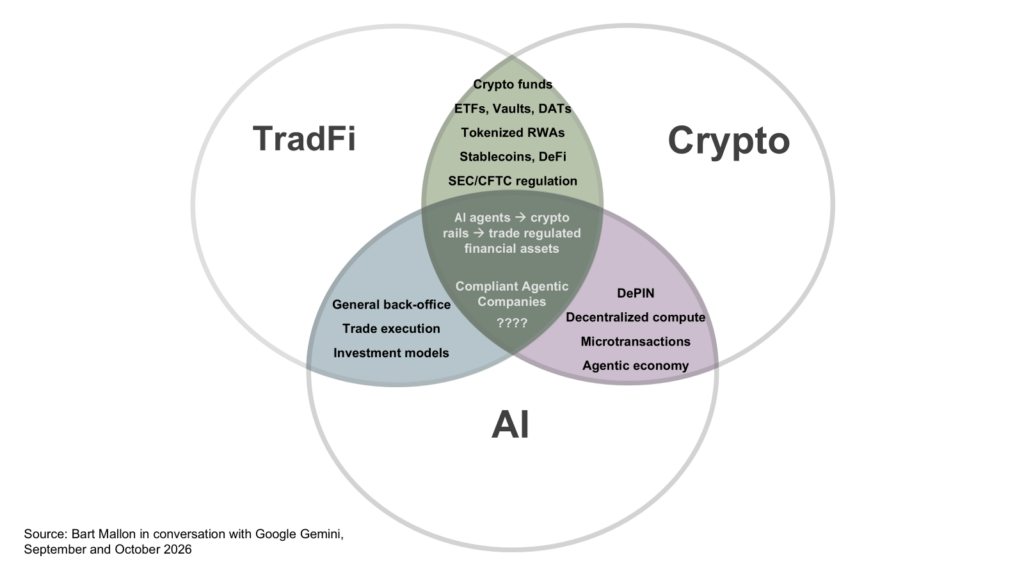
Tax Update: California and San Francisco Sourcing Rules

Clients and Associates,

In a year in which the California Franchise Tax Board (the “CaliforniaFTB”) has already adopted rules that change how asset management fees are sourced, the San Francisco Tax Collector (“SF Tax Collector”) has also finalized similar rules.  Broadly, the SF Tax Collector is now taking the position that, regardless of where an asset manager is actually located, if it provides services to investors within the city limits of San Francisco, then fees for those services should be subject to the San Francisco gross receipts tax. This position has now been codified in Tax Collector Regulation 2025-1 (the “SFRegulation”).

California FTB Sourcing Rules

Earlier this year, the California FTB adopted sweeping, new amendments to California FTB regulation Section 25136-2 (the “FTB Regulations”). The FTB Regulations addressed sourcing many different types of income to California for state taxation purposes.  One such source is fees earned from asset management services.  Effective for tax years beginning on or after January 1, 2026, an asset manager’s fees will be sourced to California for investors who are located in California.

The FTB Regulations apply regardless of an asset manager’s location inside or outside of California.  When providing such services to investors domiciled in California, asset management fees are sourced to California solely based on such investors’ domicile.  Asset managers are tasked with determining the domicile of investors by looking through to beneficial owners of the managed assets (e.g., this could require a manager to inquire whether a fund of funds has any California-based investors).  Then, once an asset manager determines all California-domiciled investors, the asset manager’s total asset management fees are apportioned to California based on the average proportion of California-domiciled assets under management (“AUM”) to the manager’s entire AUM.

The full FTB Regulations can be found here: Amendments to 25136-2.

SF Sourcing Rules

The SF Regulation is very similar to the FTB Regulations and apportions asset management fees to San Francisco based on the proportionate AUM of investors in San Francisco. However, one key threshold difference is that the SF Regulation is purported to be in effect for all tax years beginning on or after January 1,2025. Under the SF Regulation, an asset manager determines the average AUM of San Francisco-based investors throughout the year compared to an entire fund’s AUM. The percentage of San Francisco attributed AUM is multiplied by the asset management fees earned.  The result is the amount of asset management fees that are sourced to San Francisco and subject to the San Francisco gross receipts tax.

An asset manager must also determine whether investors are domiciled in San Francisco.  If an investor’s address in the asset manager’s records is in San Francisco, then the investor is presumed to be domiciled in San Francisco. However, if the asset manager has actual knowledge of a different principal place of business or primary residence of such investor, then the presumption does not control.  Additionally, if the asset manager cannot determine the domicile of an investor, then it may use a reasonable approximation to determine a domicile, which is further described in the SF Regulation.  

Additionally, much like the new California FTB rules apportioning asset management fees to California, the SF Regulation now also looks through to beneficial owners of investors in order to determine if they are San Francisco-based.  Therefore, asset managers will have to look through fund of funds investors and similar investment vehicles to determine if there are any San Francisco-domiciled investors.

While the SF Regulations could be viewed as a broad overreach by the City of San Francisco, as of now, they are the law there. Asset managers, regardless of where they are, should be aware of the impact of managing the assets of San Francisco investors.

The full SF Regulation, including examples of its application, can be found here: SF Regulation.

The above summary is also a very brief overview of the FTB and SF Regulations, and we welcome any conversations with asset managers who would like to better understand the implications of such Regulations. Please contact Kevin Leiske at [email protected] for any further discussions.

Cole-Frieman & Mallon LLP (CFM) is a leading investment management law firm known for providing top-tier, innovative, and collaborative legal solutions for complex financial services matters. Headquartered in San Francisco, CFM services start-up investment managers, multibillion-dollar funds, and everything in between. The firm provides a full suite of legal services to private funds and their managers across a diverse range of asset classes, including fund formation, regulatory compliance, counterparty documentation (digital and traditional prime brokerage, ISDA, repo, and vendor agreements), employment and compensation matters, and routine business matters.  CFM is particularly well known for its pioneering work with digital asset funds and their managers. The firm’s corporate and intellectual property (IP) practice groups advise founders, management teams, and investors during all stages of a business’s lifecycle including fundraising, M&A, governance, IP, employment, tax, and regulatory compliance for service and product launches. CFM also publishes the prominent Hedge Fund Law Blog. For more information, please add us on LinkedIn, follow us on X, and visit us at colefrieman.com.
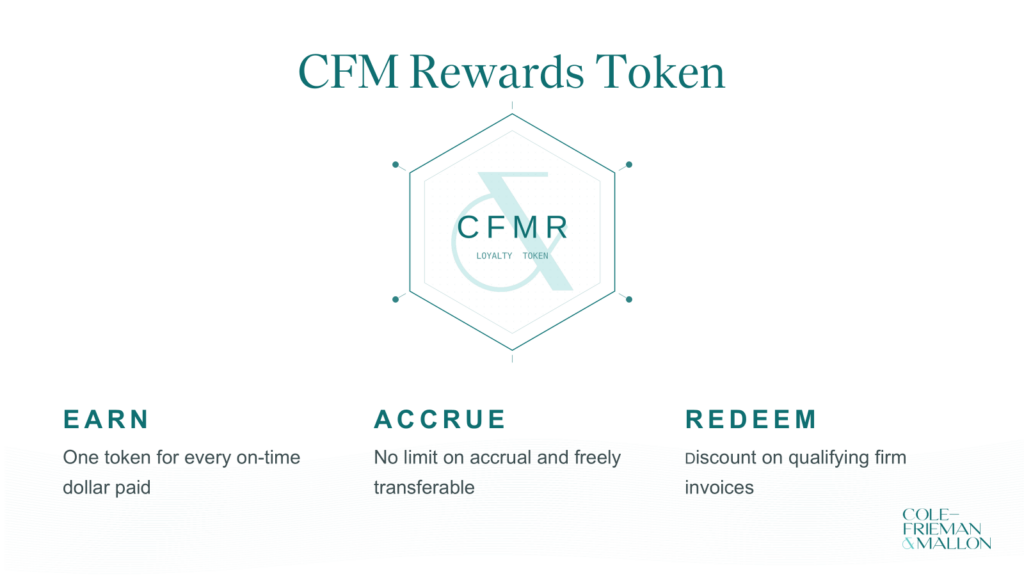
Cole-Frieman & Mallon 2025 Q3 Update

October 15, 2025

Clients, Friends, and Associates:

As we head into the fourth quarter of what has already been an exciting year in the digital asset space, we would like to highlight several recent industry and firm developments that took place during the past quarter. This update includes notable developments in the digital asset regulatory environment, including proposed new legislation, agency rulemaking, and changes in the enforcement priorities of regulators, as well as some items that affect the securities and investment management industries more broadly. As always, our intention is to present an informative, succinct overview of topics we view as top of mind for us and our clients. We remain available should you have any questions on any of these items or related matters.

****

CFM Items

CoinAlts Fund Symposium.   Cole-Frieman & Mallon LLP, along with industry leaders MG Stover, Harneys, and KPMG, is a premier sponsor of the CoinAlts Fund Symposium. This annual event, being held at the Four Seasons Hotel in San Francisco on October 29, 2025, is the anchor event of SF Fund Week 2025. It brings together the digital asset community to address investment, legal, and operational issues relevant to private fund managers. It is a must-attend gathering for industry professionals, providing unparalleled insights and networking opportunities. Join us for expert panels, top-notch speakers, and the chance to stay ahead of the curve in this rapidly evolving industry. More information is available at https://coinalts.xyz/. 

CFM People. We are pleased to introduce the newest members of our dedicated team at CFM. Devan Musser has joined as a Senior Associate, and JJ Young has joined as an Associate. Former Summer Associate Alisha Parikh has returned as a Law Clerk, and we are also pleased to welcome Administrative Assistant Agustin De Jesus. Please join us in extending a warm welcome to all

****

SEC Matters

SEC Issues No-Action Letter Regarding State Trust Companies as Qualified Custodians for Digital Assets. On September 30, 2025, the Securities and Exchange Commission’s (“SEC”) Division of Investment Management issued a no-action letter to Simpson Thacher & Bartlett LLP stating that it would not recommend enforcement action under Section 206(4) of the Investment Advisers Act of 1940, as amended (the “Advisers Act”), or Sections 17(f) and 26(a) of the Investment Company Act of 1940, as amended (the “Investment Company Act”), if a registered investment adviser or registered fund treats a State Trust Company as a “bank” for purposes of acting as a qualified custodian for crypto assets and related cash, provided certain conditions are met. The letter requires advisers and funds to (i) conduct initial and annual due diligence to confirm the trust company is authorized by its state banking regulator to provide custody services; (ii) review the company’s written policies and procedures for safeguarding crypto assets, including private-key management and cybersecurity; (iii) obtain and evaluate the company’s audited financial statements and internal-control reports (e.g., SOC-1 or SOC-2); (iv) enter into a written custodial agreement prohibiting lending, pledging, or rehypothecation of assets; (v) ensure that client assets are fully segregated from the custodian’s own assets; and (vi) provide appropriate disclosure to clients or fund boards and determine that the arrangement is in their best interest. The relief does not extend to exempt reporting or state-registered advisers and does not change the definition of a “qualified custodian.” The staff noted that its position is limited to the facts presented and does not have the force of law. The letter provides long-awaited clarity for registered advisers on using state-chartered trust companies to custody digital assets.

SEC Extends Compliance Date for the New Form PF Amendments (Again). In our 2025 Q1 Quarterly Update, we reported that the SEC extended the compliance date for Form PF amendments from March 12, 2025, to June 12, 2025. On June 11, 2025, the SEC and the Commodity Futures Trading Commission (“CFTC”) voted to extend the compliance date from June 12, 2025, to October 1, 2025. Both agencies voted to extend the compliance date to allow filers more time to test compliance with the Form PF amendments. While the extension eases immediate pressure, managers who wait too long risk running into compliance challenges when the deadline arrives. Early engagement with counsel and fund administrators will help mitigate last-minute compliance challenges.

SEC Releases a Statement on Liquid Staking Activities. On August 5, 2025, the SEC’s Division of Corporation Finance issued a staff statement addressing certain liquid staking arrangements. Of note, the Division stated that it does not view an offer or sale of securities having taken place under the Securities Act of 1933, as amended (the “Securities Act”), or the Securities Exchange Act of 1934, as amended (the “Exchange Act”), under an arrangement where depositors receive transferable “staking receipt tokens” tied to their staked assets and rewards, provided that the provider’s role is limited to administrative functions. The Division’s stated rationale is that tokens derive their value from the underlying protocol rather than from the provider’s efforts. The statement applies only to this narrow fact pattern: arrangements where providers take on more active roles (such as guaranteeing returns or directing staking decisions) could still raise securities law concerns and trigger regulatory scrutiny.

SEC Launches “Project Crypto.” On July 31, 2025, SEC Chairman Paul S. Atkins announced the SEC’s adoption of a new initiative to modernize digital asset regulation and strengthen U.S. leadership in blockchain markets. Marking a shift from enforcement toward innovation, Atkins stated that most crypto assets are not securities and outlined five priorities: (i) clear token classification; (ii) flexible custody (including self-custody); (iii) unified licensing for “super-apps”; (iv) recognition of DeFi and on-chain settlement; and (v) innovation exemptions for new business models. Atkins also cited initial coin offerings (“ICOs”) and airdrops as legitimate fundraising tools under the SEC’s Project Crypto plan to publish bright-line guidance and propose exemptions/safe harbors. Project Crypto, which builds on the White House’s digital asset report (discussed below), signals a major pivot in U.S. policy. The SEC has invited industry participants to engage in the forthcoming rulemaking process.

SEC Updates Disclosure Standards for Crypto Asset Exchange-Traded Products (“ETPs”). On July 1, 2025, the SEC’s Division of Corporation Finance released a staff statement addressing the application of the Securities Act and the Exchange Act to the registration and offering of crypto asset ETPs, generally structured as trusts holding spot crypto assets or related derivatives. The statement sets out disclosure expectations across a range of areas, including the prospectus cover page and summary, management and conflict of interest disclosures, and financial statements. Issuers are advised to tailor disclosures to the specifics of their product and to provide a clear, comprehensive discussion of risks. The SEC’s guidance makes clear that ETPs extending beyond spot Bitcoin or Ethereum will face heightened scrutiny, highlighting the need for issuers to ensure disclosures are thorough and product-specific.

****

CFTC Matters

CFTC Issues No-Action Letter on Event Contracts. On July 22, 2025, the CFTC’s Divisions of Market Oversight and Clearing and Risk issued a no-action letter granting the Chicago Mercantile Exchange (“CME”) relief from certain swap reporting and recordkeeping rules for its binary options contracts. While these contracts meet the statutory definition of “swaps,” CME argued that they are standardized, exchange-traded products with premium-style margining that limit systemic risk. The no-action relief is conditioned on CME contracts being fully margined, cleared solely through CME’s Derivatives Clearing Organization, publicly reporting trade data, and maintaining full records.
 
CFTC Regulators’ Roundtable is held in London. On July 14, 2025, the CFTC held its third annual international Emergent Technologies Roundtable in London, focused on the opportunities and risks posed by new technologies. Discussions highlighted how AI can enhance fraud detection, improve efficiency, and expand access, but also underscored the need for strong governance, responsible design, and coordination among global regulators to balance innovation with stability, oversight, and security.

****

Digital Asset Matters

Guiding and Establishing National Innovation for U.S. Stablecoins Act (the “GENIUS Act”) Signed into Legislation. On July 18, 2025, President Trump signed the GENIUS Act, marking the United States’ first federal and major framework for stablecoins. The GENIUS Act limits issuance to approved banks, Office of the Comptroller of the Currency (OCC)-qualified nonbanks, and state-licensed issuers. Stablecoins must be fully backed on a 1:1 basis and subject to monthly audits, with yield-bearing products prohibited. To protect consumers, the GENIUS Act gives stablecoin holders top priority in insolvency proceedings, ensuring their claims come before other creditors. The GENIUS Act also imposes strict AML and sanctions requirements. It takes effect in January 2027, with full compliance required by July 2028.

The Department of Justice’s (“DOJ”) Digital Asset Enforcement Focus Shift. On April 7, 2025, the Deputy Attorney General released a memo titled “Ending Regulation by Prosecution”. The memo expressed that the DOJ will no longer use criminal prosecutions to indirectly regulate digital assets, leaving regulatory classifications to the SEC, CFTC, and other agencies. The memo states that, going forward, DOJ enforcement will focus on traditional criminal conduct (e.g., fraud, money laundering, terrorist financing, narcotics, and organized crime), with a reduced focus on securities or commodities charges where the legal status of a digital asset is uncertain. The memo states that the DOJ will instead rely on alternative charges such as wire or mail fraud. The stated rationale for the shift in enforcement priorities is to give digital asset policy back to regulators while keeping the DOJ focused on prosecuting clear cases of fraud and other criminal conduct.
 
White House Issues Digital Asset Report. On July 30, 2025, the White House released its digital asset report, which sets out a new U.S. strategy for digital financial technology. The report marks a shift from a cautious regulatory posture toward a more pro-innovation, market-driven approach, treating digital assets as a strategic imperative for the U.S. Among the report’s priorities are clear rules for stablecoins, support for self-custody, technology-neutral oversight of banking and DeFi, modernized AML tools such as digital identity and blockchain analytics, and improved tax guidance. The report evinces an intent to rely on digital assets to promote investor confidence generally and to reinforce stability in U.S. markets.
 
The “Creating Legal Accountability and Responsibility in Technology for You” Act (“CLARITY Act”) Passes through U.S. House of Representatives (the “House”). On July 17, 2025, the CLARITY Act passed through the House. The bill defines a framework for trading digital commodities, designating the CFTC as the primary regulator of exchanges, brokers, and dealers, with limited jurisdiction retained by the SEC. To qualify for trading, digital commodities must either operate on a mature or decentralized blockchain or meet certain issuer reporting requirements. If enacted, the CLARITY Act would impose obligations for trade monitoring, recordkeeping, segregation of customer assets, and anti-money laundering compliance while providing limited exemptions from SEC registration for qualifying digital commodities and establishing rules for alternative trading systems, previously issued assets, and registration.

****

Other Items

House Introduces Bill to Broaden the Definition of “Accredited Investor.” On May 13, 2025, the House proposed broadening the definition of an “accredited investor” by enabling individuals to qualify not only on the basis of income or net worth but also by passing a certification examination devised by the SEC. The exam must be designed to recognize individuals with financial sophistication, test for key areas like disclosure requirements, and be administered at no cost by a registered national securities association (e.g., FINRA) within 180 days of the establishment of the exam. The change would open pathways for more individuals to participate in private offerings, including private funds.
 
House Bill Seeks to Raise SEC Registration Threshold for Private Fund Advisers to Index to Inflation. On June 3, 2025, the House introduced legislation that would amend the Advisers Act to adjust the registration exemption threshold for certain investment advisers that manage private funds, aligning it with inflation. Specifically, the bill instructs that the exemption threshold be updated to reflect the change in the Consumer Price Index since the enactment of the Private Fund Investment Advisers Registration Act of 2010, with adjustment annually thereafter. This would ease regulatory burdens on smaller private fund advisers, allowing them to manage more assets without needing to register with the SEC.
 
Financial Crimes Enforcement Network (“FinCEN”) Delays AML Rule for Investment Advisers. On September 4, 2024, FinCEN finalized a rule extending the Bank Secrecy Act’s AML/CFT requirements to most registered investment advisers and exempt reporting advisers. The rule, initially set to take effect on January 1, 2026, requires advisers to adopt written AML programs, designate compliance officers, and conduct training and audits. It also mandates compliance with suspicious activity reporting, recordkeeping, and the “travel rule.” Under the rule, oversight would be delegated to the SEC, bringing advisers into alignment with the requirements applicable to other financial institutions. On July 21, 2025, FinCEN announced that implementation would be postponed until January 1, 2028. While it appears that regulators remain intent on bringing about relative conformity in the AML standards governing financial institutions, this postponement nonetheless offers some welcome breathing room for advisers to review existing policies, strengthen AML programs, and coordinate with service providers and consultants.
 
Executive Order Issued Regarding Alternative Assets for 401(k) Investors. On August 7, 2025, President Trump signed an Order directing the U.S. Department of Labor (“DOL”), in coordination with the SEC and the U.S. Department of the Treasury, to revisit ERISA rules and create potential fiduciary safe harbors that would reduce liability risk for plan sponsors including alternatives in 401(k) plans. The DOL has 180 days to issue new guidance. The policy aims to give retirement savers broader access to asset classes such as private equity, real estate, infrastructure, private credit, hedge funds, and digital assets, which have traditionally been limited to pensions and wealthy investors. Fiduciaries will still need to address challenges around fees, valuation, liquidity, and investor protection. The order has the potential to broaden access to a much larger pool of retirement capital for alternative managers, while also putting new pressure on fiduciaries to balance fees, liquidity, and investor safeguards.
 
Congress Moves to Broaden Investor Access to Qualifying Venture Capital Funds. On July 16, 2025, the House introduced a bill to amend the Investment Company Act, by altering the definition of a “Qualifying Venture Capital Fund.”  One key change is raising the permitted maximum number of investors in such funds from 250 to 2,000, increasing potential investor participation and potentially broadening capital access. The measure, currently under consideration by the House Financial Services Committee, is intended to open alternative investment structures to more participants and enhance capital flows to early-stage companies. The increased number of investors would also allow for greater flexibility in structuring such funds.
 
House Bill Proposes to Expand the Definition of “Qualifying Investments” for Venture Capital Advisers. On July 16, 2025, the House introduced a bill to revise the definition of “qualifying investment” under the Advisers Act for venture capital fund advisers. It would require the SEC, within 180 days of enactment, to include equity securities issued by qualifying portfolio companies (whether acquired directly or secondarily) and investments in other venture capital funds within that definition. This amendment would broaden the scope of investments that count toward a venture capital fund’s “qualified investment” portfolio, thus enabling more private funds to qualify as venture capital funds and more advisers to utilize related venture capital fund adviser exemptions.
 
The Hong Kong Monetary Authority (“HKMA”) Implements a Stablecoin Issuer Regulatory Regime. On July 29, 2025, the HKMA issued a series of documents putting into place a new regulatory framework for stablecoin issuers, which took effect August 1, 2025. The new framework requires issuers of fiat-referenced stablecoins that are offered to the Hong Kong public, or otherwise circulate in the market, to be licensed and to comply with requirements around governance, reserves, disclosure, and ongoing supervision.

****

Compliance Calendar

As you plan your regulatory compliance timeline for the coming months, please keep the following dates in mind:

November 10, 2025

  • Preliminary Statements for Annual Renewal Fees become available through E-Bill and can be accessed through FINRA Firm Gateway.

November 14, 2025

  • Form 13F Quarterly Filing. Filing is for the calendar quarter that ended September 30, 2025, and must be submitted within 45 days of quarter end.
  • Form 13G Quarterly Filing. Filing is for the calendar quarter that ended September 30, 2025, and must be submitted within 45 days of quarter end if there have been any material changes since the previous filing.
  • CTA Form PR. Filing is for the calendar quarter that ended September 30, 2025, and must be submitted within 45 days of quarter end.

December 1, 2025

  • Form PF for Large Hedge Fund Advisers. Filing is for the calendar quarter that ended September 30, 2025, and must be submitted within 60 days of quarter end.
  • CPO-PQR Form. Filing is for the calendar quarter that ended September 30, 2025, and must be submitted within 60 days of quarter end.

December 8, 2025

  • Annual Renewal Payments Due for Preliminary Statement issued in E-Bill for Registration/Notice Filings. Payment can be made through FINRA Firm Gateway.

Periodic

  • Form D and Blue Sky Filings should be current.
  • CPO/CTA Annual Questionnaires must be submitted annually, and promptly upon material information changes, through the NFA Annual Questionnaire system.
  • Beneficial Ownership Reporting to FinCEN:
    • For reporting companies created in 2024, within 90 days of creation or registration.
    • For reporting companies created on or after January 1, 2025, within 30 days of creation or registration.
    • For updated reports, within 30 days after previously reported information changes.

Consult our complete Compliance Calendar for all 2025 critical dates as you plan your regulatory compliance timeline for the year.

Please contact us with any questions or assistance regarding compliance, registration, or planning issues on any of the above topics.

Sincerely,

Karl Cole-Frieman, Bart Mallon, John T. Araneo, Brett Bunnell, Garret Filler, Scott Kitchens, Kevin Leiske, Frank J. Martin, Lilly Palmer, Daniel M. Payne, David Rothschild, Bill Samuels, Tony Wise, and Alex Yastremski

Cole-Frieman & Mallon LLP (CFM) is a leading investment management law firm known for providing top-tier, innovative, and collaborative legal solutions for complex financial services matters. Headquartered in San Francisco, CFM services start-up investment managers, multibillion-dollar funds, and everything in between. The firm provides a full suite of legal services to private funds and their managers across a diverse range of asset classes, including fund formation, regulatory compliance, counterparty documentation (digital and traditional prime brokerage, ISDA, repo, and vendor agreements), employment and compensation matters, and routine business matters.  CFM is particularly well known for its pioneering work with digital asset funds and their managers. The firm’s corporate and intellectual property (IP) practice groups advise founders, management teams, and investors during all stages of a business’s lifecycle including fundraising, M&A, governance, IP, employment, tax, and regulatory compliance for service and product launches. CFM also publishes the prominent Hedge Fund Law Blog. For more information, please add us on LinkedIn, follow us on X, and visit us at colefrieman.com.
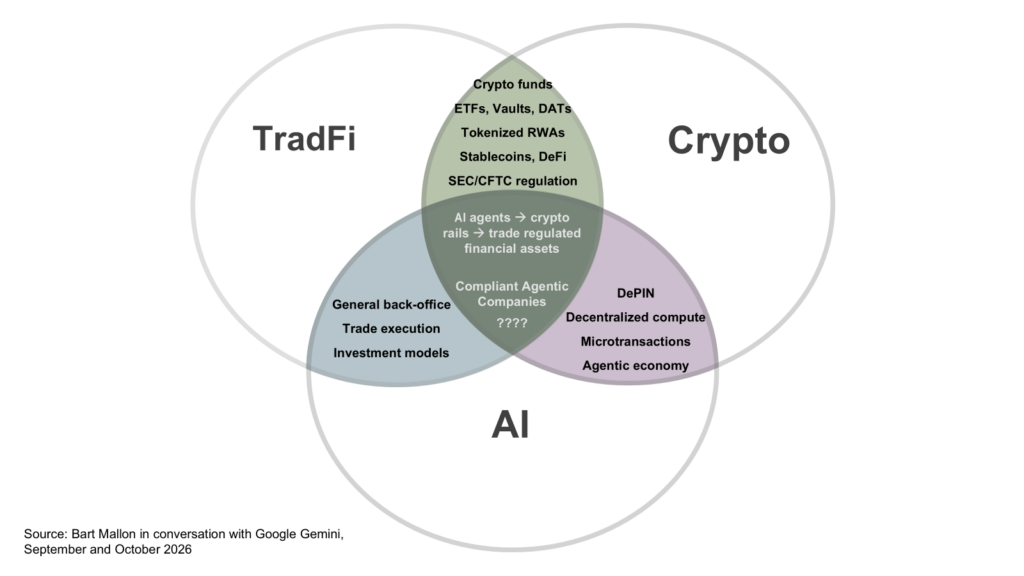
Cole-Frieman & Mallon 2025 Q2 Update

July 10, 2025

Clients, Friends, and Associates:

As we close out the second quarter of what has been an eventful year for the digital asset sector, we would like to highlight several recent industry and firm developments that we believe will be of interest to many of our clients and colleagues. This update includes notable developments regarding the regulatory environment around digital assets specifically, as well as items that affect the securities and investment management industries more broadly. As always, our intention is to present an informative, brief overview of these topics. We are available should you have any questions on any of these items or related matters.

****

CFM Items

CFM Hedge Funds Practice and Managing Partner Karl Cole-Frieman Each Receive Chambers Rankings. We are pleased to announce that CFM’s hedge funds practice has been recognized by Chambers as a Band 4 hedge funds practice among U.S. law firms, and Karl Cole-Frieman has been ranked within Band 5 among hedge funds attorneys nationwide. While the greatest accolades are those we receive from our clients, we are incredibly proud of the efforts and partnerships that have brought our hedge funds practice and Karl Cole-Frieman to a nationally recognized industry standing, a pivotal milestone in the firm’s continued growth trajectory.

CoinAlts Fund Symposium. CFM, along with industry leaders MG Stover, Harneys, and KPMG, is a premier sponsor of the CoinAlts Fund Symposium. This annual event, being held at the Four Seasons Hotel in San Francisco on October 29, 2025, is the anchor event of SF Fund Week 2025. It brings together the digital asset community to address investment, legal, and operational issues relevant to private fund managers. The conference is a must-attend gathering for industry professionals, providing unparalleled insights and networking opportunities. Join us for expert panels, top-notch speakers, and the chance to stay ahead of the curve in this rapidly evolving industry. More information is available at https://coinalts.xyz/.

CFM People. We are excited to welcome two outstanding additions to the CFM team. Kevin Leiske has joined the firm as a Partner, bringing with him a wealth of experience and deep industry insight that will further strengthen our practice. We are also pleased to introduce Ajwang Rading, who recently joined us as an Associate. Please join us in giving a warm welcome to Kevin and Ajwang!

****

SEC Matters

Crypto Task Force Organized to Support the Development of Digital Asset Policy. The Securities and Exchange Commission (“SEC” or the “Commission”) announced it would bring together staff from the Chairman’s office and other divisions to find “workable solutions to difficult crypto regulatory problems.” The Crypto Task Force quickly went to work, hosting several roundtables on various topics such as Crypto Trading and DeFi. Additional roundtables are scheduled in the coming months. These meetings are open to the public and uploaded on YouTube for future viewers. The SEC’s expressed goal is to “draw clear regulatory lines, provide realistic paths to registration, craft sensible disclosure frameworks, and deploy enforcement resources judiciously.” Although the impact of these roundtables remains to be seen, it is clear that the SEC has pivoted to embrace the new administration’s view on crypto and regulation. Those interested in providing written input to the Crypto Task Force may do so via an online form.

SEC Statements on Digital Assets. The SEC’s Division of Corporation Finance recently issued four separate statements on digital assets covering Meme Coins, Stablecoins, Protocol Staking, and the offering and registration of securities in crypto asset markets in hopes of providing “clarity on the application of the federal securities laws to crypto assets.” Regarding Covered Stablecoins and Meme Coins, the Division has indicated that the purchase and sale of these assets do not qualify as the purchase or sale of securities under federal securities laws. Regarding Protocol Staking, the Division clarified its view that certain “staking” activities are not securities transactions within the scope of the federal securities laws. Regarding crypto asset registration requirements, the SEC provided guidance on Securities Act registration filings, such as Form S-1, Form 10, Form 20-F, and Form 1-A. The Division indicated that the guidance is being provided as a stopgap measure to support registrants while the Crypto Task Force is evaluating the SEC’s broader policies and framework for crypto assets.

SEC Announces Dismissal of Civil Enforcement Action Against Coinbase. The SEC announced in February that a joint stipulation was filed with Coinbase Inc. and Coinbase Global Inc. to dismiss the SEC’s civil enforcement action against both entities. In the accompanying press release, the SEC noted that it was time for the Commission to shift away from enforcement as regulation, and the SEC noted its decision to dismiss the case was due to renewed efforts to reform the regulatory approach to digital assets. Coinbase issued its own statement, noting that the SEC is “righting a major wrong.”

SEC Roundtable on Artificial Intelligence. The SEC hosted an artificial intelligence (“AI”) roundtable with an aim to redefine the Commission’s approach to understanding, defining, and implementing AI policy. Many participants at the roundtable emphasized the importance of taking a technology-neutral approach to AI and encouraged the Commission to avoid imposing barriers to the adoption of the technology. All sessions from this roundtable are available on YouTube.

SEC Formally Withdraws Fourteen Notices of Proposed Rulemaking. In June, the SEC formally withdrew fourteen notices of proposed rulemaking, including proposed rulemaking on topics such as cybersecurity risk management for investment advisers, predictive data analytics, safeguarding/custody of advisory client assets, best execution, and outsourcing by investment advisers. The SEC states that it does not intend to issue final rules with respect to these proposals, and that any future regulatory action in any of these areas would be accompanied by a newly proposed rule. The withdrawn rules were originally issued between March 2022 and November 2023, during the tenure of former SEC Chair Gary Gensler.

Compliance Date Extension for Investment Company Act “Names Rule.” The SEC announced a six-month extension for compliance with the “Names Rule,” which requires investment advisers to use names for their registered investment companies that align with the companies’ investment focus and risks. The large fund groups compliance date has been extended from December 11, 2025, to June 11, 2026, and the compliance date for smaller fund groups was extended from June 11, 2026, to December 11, 2026.

While the Names Rule pertains only to registered investment companies and not private funds, its upcoming implementation should serve as caution that an investment fund’s name may be viewed by regulators as having a strong impact on potential investors, making it important that a fund’s name accurately reflect the strategy/ies of the fund.

EDGAR Next Launched on March 24. As a reminder, and as mentioned in our 2025 Q1 Update, the enrollment portal will remain open until December 19, 2025. However, the SEC is requesting filers enroll no later than September 12, 2025, to avoid any interruptions. Additional information on enrolling and the new system can be found here.

****

CFTC Matters

Acting Chair Pham Praises Justice Department Policy Changing Digital Asset Enforcement. The Acting Commodities Futures Trading Commission (“CFTC”) Chairman issued a statement regarding the importance of “holding bad actors accountable” when bringing digital asset-focused enforcement actions. He also noted regulators should focus on setting clear rules “that foster innovation.”In addition, Acting Chair Pham has instructed all CFTC employees to comply with the President’s executive order to stop referring regulatory prosecution to the Department of Justice. He believes that previous instances of using the Justice Department for regulatory prosecution have “undermined trust in the regulatory process and impeded American competitiveness,” and committed to seeing that all resources of the CFTC be directed towards ensuring “lawful governance.”

CFTC Staff Withdrew Multiple Advisory Statements to Clarify Staff Priorities. The CFTC withdrew three CFTC Staff Advisory letters:

  • Staff Advisory No. 18-14, concerning listings of virtual currency derivative products, was withdrawn because the Division of Market Oversight and the Division of Clearing and Risk believe that the advisory is no longer needed due to robust standards and procedures implemented over the years for virtual currency and digital asset derivatives.
  • CFTC Letter No. 21-19, concerning swap execution facility registration requirements, was withdrawn by the Division of Market Oversight due to the amount of regulatory uncertainty it was creating.
  • Staff Advisory No. 23-07, concerning risks associated with derivative clearing organizations’ clearing of digital assets, was withdrawn by the Division of Clearing and Risk so that “it does not suggest that its regulatory treatment of digital asset derivatives will vary from its treatment of other products.”

CFTC Revamps Referrals to the Division of Enforcement. The CFTC’s Department of Enforcement (“DOE”) announced changes to how it was accepting referrals and provided guidance to present “registrants and registered entities with fair notice and greater transparency.” DOE had previously released an Enforcement Advisory on Self-Reporting, Cooperation, and Remediation, and the follow-up Staff Advisory includes specific criteria the staff should consider when making referrals to DOE. One key change is that registered entities can self-report violations to different CFTC Operating Divisions and receive credit for self-reporting instead of reporting directly to the DOE. The Operating Divisions will then evaluate the violations and aim to only refer material supervision issues or material non-compliance issues to the DOE. Other violations are expected be addressed directly by the Operating Division with the registrant or registered entity. The CFTC’s goal is to facilitate open and transparent engagement by registrants or registered entities with the Operating Divisions as well as to identify emerging issues, risks, or trends earlier.

CFTC Requests Comments on Perpetual Contracts in the Derivatives Market. In April, the CFTC issued a Request for Comment to help it better understand the characteristics of perpetual futures and other derivative contracts. TheCFTC is specifically seeking feedback on the use cases for the products, any opportunities these contracts might create, and the challenges or potential risks of using these products. Comments were accepted by the CFTC until the close of the comment period on May 23, 2025.

****

Digital Asset Matters

Department of Justice Issues Memorandum on Changes to Digital Asset Enforcement. The Office of the Deputy Attorney General (“ODAG”) issued a memorandum signaling a departure from previous litigation and enforcement actions that were “weaponized against digital assets.” The priority shift follows Executive Order 14178, which tasks several offices with protecting and promoting blockchain networks and providing fair and open access to banking services. According to the memorandum, the Justice Department will no longer target any “virtual currency exchanges, mixing and tumbling services, and offline wallets for the acts of their end users or unwitting violations of regulations” unless these services explicitly victimize investors or use these services to further criminal offenses.

All ongoing investigations that do not meet that criteria will be closed, and the ODAG will review all cases to ensure they align with the new policy issued by the President. All rules that are contrary to the Executive Order will also be rescinded, and Department employees have been told not to charge regulatory violations in any cases where the Justice Department would need to determine whether a digital asset is a security or commodity. Although this is a dramatic shift in enforcement, companies and managers operating in the digital asset space should be wary of removing or stopping any compliance or risk assessments associated with their digital asset products. While the Justice Department is relaxing its enforcement stance vis-à-vis digital assets, digital asset investigations remain a priority for many state attorney general offices.

****

Other Matters

FinCEN Final Rule Regarding AML/CFT Program and Suspicious Activity Report Filing Requirements for Certain Investment Advisers. As briefly noted in our 2024 End of Year Update, the Financial Crimes Enforcement Network (FinCEN) has issued its final rule expanding certain requirements under the Bank Secrecy Act (“BSA”) to most SEC-registered investment advisers and SEC exempt reporting advisers (the “Final Rule”).

Among other requirements, subject investment advisers will be required to:

  • implement a risk-based and reasonably designed Anti-Money Laundering/Countering the Financing of Terrorism (AML/CFT) program;
  • file reports like the Suspicious Activity Report (SAR) with FinCEN;
  • maintain recordkeeping of fund transfers, in compliance with the Recordkeeping and Travel Rules; and
  • fulfill other obligations in compliance with the BSA and FinCEN’s implementing regulations, such as special information sharing procedures.

The SEC will be responsible for review and enforcement of the Final Rule. Subject investment advisers will have until the compliance date of January 1, 2026, to comply with the Final Rule’s requirements.

Form BE-180 Benchmark Survey for Certain Investment Advisers. The U.S. Bureau of Economic Analysis is conducting its Benchmark Survey of Financial Services Transactions Between U.S. Financial Services Providers and Foreign Persons, a survey of U.S.-based financial services providers that have effected financial services transactions with non-U.S. persons during their preceding (2024) fiscal year. This includes U.S.-based investment advisers with non-U.S. clients, funds, or service providers. Such advisers should complete and file the Form BE-180 by July 31, 2025.

British Virgin Islands (“BVI”) Implements Additional Information Compliance Form. In April, the British Virgin Islands International Tax Authority (“ITA”) updated their Financial Account Reporting System guide to include a new compliance form that allows the country to collect additional data of its users. This data will be used to determine the effectiveness of the Reporting Standards in the BVI.

****

Compliance Calendar

As you plan your regulatory compliance timeline for the coming months, please keep the following dates in mind:

July 10, 2025

  • Quarterly Form 13H Amendment. Filing is for the calendar quarter that ended June 30, 2025, and should be submitted within 10 days of quarter end if any material on the Form 13H became inaccurate.

July 15, 2025   

  • Quarterly Form PF due for Large Liquidity Fund Advisers. Filing is for the calendar quarter that ended June 30, 2025.

July 31, 2025

  • ERISA Schedule C of DOL Form 5500 Disclosure.

August 14, 2025

  • Quarterly Form 13F Filing. Filing is for calendar quarter that ended June 30, 2025, and should be submitted within 45 days of quarter end.
  • Schedule 13G Amendment. Filing is for the calendar quarter that ended June 30, 2025, and should be submitted within 45 days of quarter end if any material on the Form 13G became inaccurate.
  • CTA Form PR. Filing is for calendar quarter that ended June 30, 2025, and should be submitted within 45 days of quarter end.

August 29, 2025

  • Form PF for Large Hedge Fund Advisers. Filing is for the calendar quarter that ended June 30, 2025, and should be submitted within 60 days of quarter end. 
  • CPO-PQR Form. Filing is for calendar quarter that ended June 30, 2025, and should be submitted within 60 days of quarter end. 
  • Form N-PX Filing. This filing covers the 12-month period of July 1, 2024, through June 30, 2025.

January 1, 2026

  • FinCEN Final Rule. Certain SEC-registered investment advisers and SEC exempt reporting advisers must implement AML/CFT compliance programs and other obligations under the Final Rule by January 1, 2026. 

Periodic

  • Form D and Blue Sky Filings should be current.
  • CPO/CTA Annual Questionnaires must be submitted annually, and promptly upon material information change, through the NFA Annual Questionnaire system.

Consult our complete Compliance Calendar for all 2025 critical dates as you plan your regulatory compliance timeline for the year.

Please contact us with any questions or assistance regarding compliance, registration, or planning issues on any of the above topics.

Sincerely,

Karl Cole-Frieman, Bart Mallon, John T. Araneo, Brett Bunnell, Garret Filler, Scott Kitchens, Kevin Leiske, Frank J. Martin, Lilly Palmer, Daniel M. Payne, David Rothschild, Bill Samuels, Tony Wise, and Alex Yastremski

Cole-Frieman & Mallon LLP (CFM) is a leading investment management law firm known for providing top-tier, innovative, and collaborative legal solutions for complex financial services matters. Headquartered in San Francisco, CFM services start-up investment managers, multibillion-dollar funds, and everything in between. The firm provides a full suite of legal services to private funds and their managers across a diverse range of asset classes, including fund formation, regulatory compliance, counterparty documentation (digital and traditional prime brokerage, ISDA, repo, and vendor agreements), employment and compensation matters, and routine business matters.  CFM is particularly well known for its pioneering work with digital asset funds and their managers. The firm’s corporate and intellectual property (IP) practice groups advise founders, management teams, and investors during all stages of a business’s lifecycle including fundraising, M&A, governance, IP, employment, tax, and regulatory compliance for service and product launches. CFM also publishes the prominent Hedge Fund Law Blog. For more information, please add us on LinkedIn, follow us on X, and visit us at colefrieman.com.
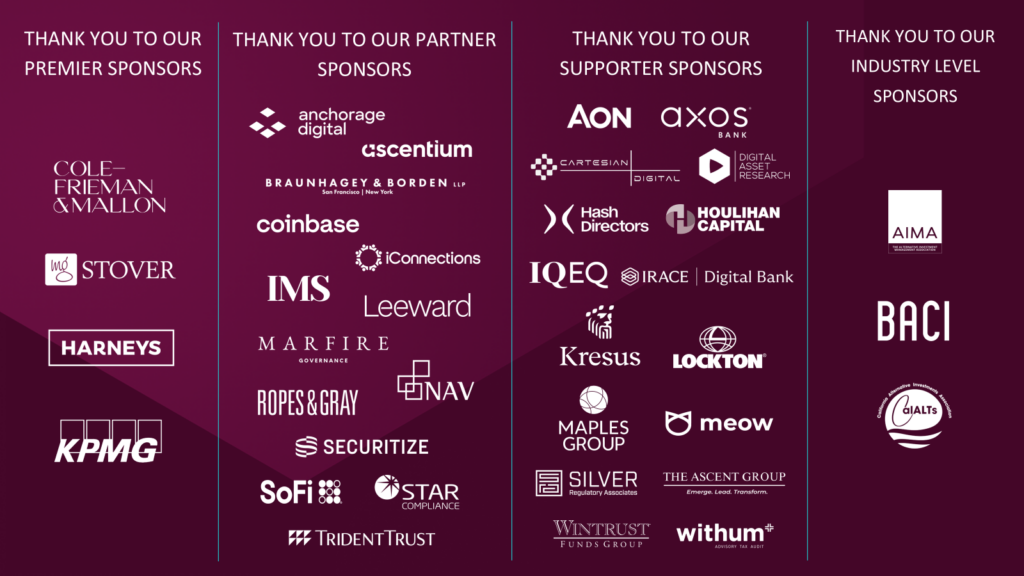
Cole-Frieman & Mallon 2025 Q1 Update

April 9, 2025

Clients, Friends, and Associates:

As we move into 2025 and the first quarter comes to a close, we would like to highlight noteworthy industry updates that we found to be both interesting and impactful. This update includes key developments that may shape the business and regulatory landscape in the months ahead. As always, we strive to present an informative, albeit brief, overview of these topics, and we are available should you have any related questions.

****

CFM Items

CoinAlts Fund Symposium.  Cole-Frieman & Mallon LLP, along with industry leaders MG Stover, Harneys, and KPMG, is a premier sponsor of the CoinAlts Fund Symposium. This annual event, being held at the Four Seasons Hotel in San Francisco on October 29, 2025, is the anchor event of SF Fund Week 2025. It brings together the digital asset community to address investment, legal, and operational issues relevant to private fund managers. It is a must-attend gathering for industry professionals, providing unparalleled insights and networking opportunities. Join us for expert panels, top-notch speakers, and the chance to stay ahead of the curve in this rapidly evolving industry. More information is available at https://coinalts.xyz/.

CFM People. We are thrilled to announce the promotion of Brett Bunnell to Partner and the elevation of Daniel Payne from Of Counsel to Partner. We are also pleased to share that Riwana Totah has been promoted to Director of Administration. Additionally, we are excited to introduce the newest member of our dedicated team at CFM, Emilee Siegl, who recently joined us as an Associate. Please join us in congratulating Brett, Daniel, and Riwana, and extending a warm welcome to Emilee!

****

SEC Matters

SEC Charges Firms with Recordkeeping Failures. On January 13, 2025, the Securities and Exchange Commission (the “SEC”) announced charges against 12 firms, including both investment advisers and broker-dealers, for violating the recordkeeping requirements of the Investment Advisers Act of 1940 (the “Advisers Act”) and the Securities and Exchange Act of 1934, as amended (the “Securities Act”). The investigations revealed widespread use of unauthorized communication channels and systematic failures in maintaining required records of business communications, with violations occurring across multiple organizational levels. Out of the 12 charged firms, only one firm was given a reduced civil penalty for self-reporting. These charges are part of the SEC’s continued effort to minimize unsanctioned communications and actions. SEC-regulated firms should maintain relevant policies and procedures and regularly review such policies with employees.

SEC Files Charges Against Two Private Companies and One Investment Adviser for Failure to File Forms D. On December 20, 2024, the SEC announced charges against three parties – an SEC-registered investment adviser and two privately held companies – for failing to timely file Forms D for securities offerings. The SEC emphasized that these filings are essential for monitoring private capital formation and market compliance, noting that the charged parties failed to provide information about nearly $300 million of unregistered securities offerings. The charged parties agreed to cease violations and pay civil penalties ranging from $60,000 to $195,000, without admitting or denying the findings. This enforcement action underscores the SEC’s commitment to maintaining transparency in private securities offerings and enforcing compliance with filing requirements.

SEC Charges Asset Manager for Improperly Withholding Investor Funds. On December 23, 2024, the SEC charged an asset manager (the “Manager”) and its principal with violating the Advisers Act for improper management of a private fund (the “Fund”). The SEC alleges that beginning in November 2016, the Manager blocked investors from withdrawing from the Fund while simultaneously making long-term investments in small-cap equities that the principal owned in a personal capacity. The complaint states that the principal was personally incentivized for the Fund to hold these securities, but did not disclose this conflict to investors. This case demonstrates the SEC’s continued focus on protecting investors from misleading practices and undisclosed conflicts of interest. Fund managers should ensure they have robust compliance policies to avoid similar enforcement actions.

SEC Amends the Customer Protection Rule. The SEC has adopted amendments to Rule 15c3-3 (the “Customer Protection Rule”), requiring larger broker-dealers to increase the frequency of their customer reserve computations from weekly to daily. The new requirements, adopted on December 20, 2024, will apply to broker-dealers with average total credits of $500 million or more, calculated as a 12-month rolling average from their FOCUS Reports. In certain cases, they also include provisions allowing qualifying broker-dealers to reduce their customer-related receivables charge from 3% to 2% in their reserve computations. Broker-dealers exceeding the $500 million threshold from July 31, 2024, through June 30, 2025, must begin daily computations by December 31, 2025. The amendments aim to address potential mismatches between cash inflows and reserve account deposits that could pose risks to customers if a broker-dealer were to fail financially.

SEC Adopts Amendments to Form PF. The SEC recently announced that the compliance date for the new Form PF amendments has been extended to June 12, 2025.The amendments include substantial changes to the Form PF, requiring filers to collect and report more detailed information about the funds they advise, including their beneficial ownership. Managers who must file the Form PF (SEC-registered investment advisers with more than $150 million in assets under management) should begin collecting this information from existing investors and updating their subscription documents and other investor onboarding materials.

SEC Issues No-Action Letter on Rule 506(c) Offerings. On March 12, 2025, the SEC’s Division of Corporation Finance issued a no-action letter that provides a new safe harbor for Rule 506(c) offerings. The new guidance simplifies the rule’s accredited investor verification requirements, provided three conditions are met: (i) investors must represent their investment is not being financed by a third party specifically for this investment; (ii) minimum investment thresholds must be met ($1 million for entities, $200,000 for natural persons); and (iii) and the issuer must have no actual knowledge that a purchaser is not an accredited investor or has financed the investment. We anticipate this may make Rule 506(c) offerings more prevalent, especially for private funds that previously found verification requirements to be a roadblock. This no-action letter is particularly important in today’s environment where fund managers increasingly engage in public outreach through social media, podcasts, and other channels.

SEC Issues New Marketing Rule FAQs. The SEC has issued new guidance on Rule 206(4)-1 under the Advisers Act (the “Marketing Rule”). The revised FAQs permit an adviser to present gross-only extracted performance without calculating corresponding net figures if the adviser also presents the portfolio’s total net and gross performance in equal prominence. The FAQs further clarify that investment characteristics like yield or Sharpe ratios can be presented without net equivalents if the adviser satisfies specific requirements and the presentation does not mislead investors.

EDGAR Next Launched on March 24th. EDGAR Next, the SEC’s new electronic filing access and account management platform, launched on March 24, 2025. Existing filers will have until September 12, 2025, to enroll in EDGAR Next, after which they can no longer use the old EDGAR system. The new platform requires individual login credentials through Login.gov with multi-factor authentication, and filers must designate account administrators (at least two for most filers) who will manage accounts, delegate filing authority, and perform annual confirmations. There will be a streamlined enrollment process for existing filers until December 19, 2025, after which those who have not enrolled will need to reapply with a new Form ID. Companies are advised to begin preparations to ensure a smooth transition before the September 2025 deadline.

****

CTA Updates

Corporate Transparency Act Reporting Requirements Scaled Back. On March 21, 2025, the Financial Crimes Enforcement Network (“FinCEN”) adopted an interim final rule that significantly narrows the scope of the Corporate Transparency Act (“CTA”) beneficial ownership information (“BOI”) reporting requirements. The new rule exempts all domestic entities and U.S. person beneficial owners from BOI reporting obligations, and redefines “reporting company” to include only foreign entities registered to do business in the United States. Notwithstanding, foreign reporting companies with only U.S. person beneficial owners are exempt from reporting requirements. For foreign entities still subject to reporting, the filing deadline for existing entities has been extended to April 25, 2025, and newly formed entities will have 30 days from the date of formation to file their initial BOI report. FinCEN is currently accepting comments on the interim final rule and intends to issue a final rule later in 2025.

****

Digital Asset Matters

Form ADV Filings Following a Delayed Audit. As you may know, investment advisers in the digital asset space often receive their audited financials after the March 31 deadline for annual Form ADV amendments. If you filed your Form ADV before your audit was completed, please remember that you must submit an other-than-annual amendment once the audit is finalized to document its completion.

SEC Rescinds Staff Accounting Bulletin 121. In January 2025, the SEC rescinded Staff Accounting Bulletin 121 (“SAB 121”), which suggested that financial institutions report client digital assets held in custody as balance sheet liabilities. The new guidance, Staff Accounting Bulletin 122 (“SAB 122”), eliminates this digital asset-specific treatment and brings these institutions under standard accounting practices. Under SAB 122, financial institutions need only consider the risk of loss of such assets, calculated using their own data and risk assessments consistent with existing Financial Accounting Standards Board and International Accounting Standards guidance. The rescission comes after significant industry pushback, including opposition from a bipartisan congressional group and SEC Commissioner Hester Peirce.

SEC Announces New Digital Asset Task Force. On January 21, 2025, the SEC’s Acting Chairman, Mark T. Uyeda, launched a new task force to develop an improved regulatory framework for digital assets. This initiative aims to address the SEC’s previous approach of using enforcement actions to regulate the digital asset industry. The task force will focus on establishing clear guidelines and creating practical pathways for companies to register with the SEC. Industry insiders are optimistic that new common-sense regulations in the United States will help foster digital asset innovation and fight fraudulent activity.

President Trump to Establish Strategic Bitcoin Reserve. President Donald Trump announced in a March 6, 2025 executive order that the United States will establish a Strategic Bitcoin Reserve and a Digital Asset Stockpile to manage the federal government’s digital asset holdings. The order mandates that Bitcoin seized through criminal or civil asset forfeiture be transferred to the Strategic Bitcoin Reserve and maintained as long-term reserve assets. Other digital assets will be placed in the Digital Asset Stockpile, where the Treasury Department is tasked with determining appropriate management strategies. The Secretary of the Treasury and the Secretary of Commerce have also been directed to develop budget-neutral strategies for acquiring additional Bitcoin.

Third Circuit Orders the SEC to Explain its Lack of Crypto Rulemaking. On January 7, 2025, the U.S. Court of Appeals for the Third Circuit in Philadelphia ruled partially in favor of Coinbase in its case against the SEC. The three-judge panel determined that the SEC’s dismissive response to Coinbase’s request for explicit crypto regulations was “arbitrary and capricious.” While the court did not force the SEC to create new crypto-specific rules, it ordered the agency to provide a more detailed explanation for why it has refused to do so. Coinbase’s Chief Legal Officer Paul Grewal expressed satisfaction with the court’s decision on social media, while the SEC spokesperson indicated they are reviewing the decision to determine next steps.

CFM Partner Daniel Payne recently opined on the case in his article “4 Potential Effects of 3rd. Circ.’s Coinbase Ruling.” Daniel’s article explores how the ruling marks a pivotal moment in digital asset regulation, with implications rippling through multiple aspects of the legal and regulatory landscape. The immediate impact is already visible in pending cases as courts grapple with the ruling’s assertion that securities laws “fit crypto awkwardly.” This judicial skepticism arrives at a crucial legislative juncture, with a new pro-crypto administration in place and Congress poised to act on digital asset regulation, making the court’s rebuke of the SEC’s approach likely to shape upcoming policy discussions. The ruling may also reinvigorate the legal strategy of “fair notice” defenses in digital asset cases, with the concurrence’s rejection of both the Howey test and the 2017 DAO report as adequate guidance, potentially changing how future cases are argued and decided.

SEC Charges a Cayman Islands Corporation with Negligently Misleading Investors About Stability of Terra USD. Almost two years after the collapse of Terra Luna and a year after the bankruptcy of Terraform Labs PTE Ltd. (“Terraform”), the SEC charged a Cayman Islands corporation (“CaymanCo”) with misleading investors about Terra USD’s (“UST”) stability and for conducting unregistered securities transactions involving LUNA cryptocurrency. According to the SEC’s order, when UST lost its $1 peg in May 2021, CaymanCo entered into an agreement with Terraform for incentivized UST purchases in exchange for discounted LUNA purchase options. The SEC alleges that CaymanCo’s purchases of over $20 million in UST negligently deceived the market by making it appear that Terraform’s algorithmic mechanism was maintaining stability. In the settlement, CaymanCo agreed to pay disgorgement penalties with prejudgment interest and civil penalties while neither admitting nor denying the SEC’s findings.

Cayman Islands Introduces Phase 2 of VASP Regime. The Cayman Islands published the Virtual Asset (Service Providers) (Amendment) Act (the “Act”) on December 19, 2024, establishing phase two of their Virtual Asset Service Provider (“VASP”) regime and introducing licensing requirements for virtual asset trading platforms and custodians. Under this new legislation, existing registered providers must apply for a license within 90 days of the Act’s commencement, and all VASPs must comply with expanded operational requirements.

The Act implements several key operational changes, including the requirement: (i) for VASPs to maintain at least three directors (at least one being independent), (ii) to obtain prior approval from the Cayman Islands Monetary Authority (“CIMA”) for business plan modifications, (iii) to notify CIMA of litigation within 30 days, (iv) to hold client fiat currency in regulated banks with proper fund segregation, and (v) to avoid making misleading representations about their virtual asset activities. These measures aim to strengthen the regulatory framework for virtual asset services in the Cayman Islands while ensuring proper oversight and consumer protection.

****

CFTC Matters

Court Rules Against Digital Asset Exchange. On December 30, 2024, the United States District Court for the Southern District of Florida entered orders of final default judgment against a digital asset exchange and trading platform and its owner for “fraudulent digital asset solicitation and trading scheme and misappropriation.” The default judgment order found that the digital asset exchange convinced customers to transfer their Bitcoin and other funds to the digital asset exchange under the false pretense that the digital asset exchange had millions of dollars in assets under management. The order also indicated that the digital asset exchange misled customers by advertising “win” rates that were merely hypothetical projections and lied about maintaining partnerships and broker agreements with certain other digital asset exchanges.

CFTC Withdraws Swap Execution Facility Registration Advisory. The Division of Market Oversight of the Commodity Futures Trading Commission (“CFTC”) announced the immediate withdrawal of its Swap Execution Facility Registration Advisory (the “Advisory”). This withdrawal restores the pre-Advisory regulatory framework for swap execution facility (“SEF”) registration requirements and comes amid Acting Chairman Caroline Pham’s broader effort to provide regulatory clarity. The withdrawal brings relief to market participants (such as commodity trading advisors and introducing brokers that facilitate swap executions for clients), many of whom felt that the Advisory created uncertainty in the market.

****

State Privacy Act Rules

New Year Round-Up on State Consumer Privacy Law. Several states enacted comprehensive data privacy statutes throughout 2024, and many laws enacted in 2023 went into effect at the start of this year. These laws are generally consistent with earlier consumer data privacy laws, which provide consumers with similar rights to request, delete, know, etc. Covered businesses also have broadly consistent obligations concerning the personal information they collect. A few notable updates in the privacy space are as follows:

  • Delaware: The Delaware Personal Data Privacy Act went into effect on January 1, 2025, and applies to entities that control or process data of at least 35,000 Delaware consumers. Notably, the consumer threshold is among the lowest for state privacy laws.
  • Colorado: The Colorado legislature passed amendments to the Colorado Privacy Act (the “CPA”) related to biometric data and minors’ online activity. Such amendments will be effective July 1, 2025, and October 1, 2025, respectively. The CPA amendments also establish processes, effective January 30, 2025, by which entities subject to the CPA may request opinion letters or interpretive guidance from the Attorney General. 
  • Minnesota: The Minnesota Consumer Data Privacy Act (the “MNCDPA”), effective July 31, 2025, specifically excludes individuals acting in a commercial employment context from the definition of “consumer” for purposes of the MNCDPA. The law also applies to entities acting as “technology providers” as part of efforts to ensure that entities that provide technology to public schools are adequately covered.

****

Other Items

Implications of Denham Capital Management LP v. Commissioner. The U.S. Tax Court issued a significant opinion in December 2024 in the case of Denham Capital Management LP v. Commissioner, addressing when partnership distributive shares to limited partners can be excluded from self-employment income. The court upheld the standard set in the 2023 Soroban Capital Partners LP v. Commissioner case, which requires a “functional analysis” to determine whether partners are functioning as true limited partners or are limited partners in name only.

In Denham, the court found that the petitioner’s limited partners were more akin to employees than passive investors, and, therefore, their partnership allocations were subject to self-employment tax. The evidence showed that the petitioner’s limited partners were actively involved in managing the petitioner’s investment advisory business and were essential to the firm’s operations. The court noted that most of the petitioner’s limited partners had made no capital contributions and derived their income from services rather than passive investment.

By focusing on the economic reality that the partners were operating the petitioner’s business as self-employed persons, the court emphasized that the limited partner exception to the self-employment tax was intended to apply to truly passive investors, not active participants in a partnership’s management.

DFI Issues Notice on Use of Third-Party Platforms for Managing Held-Away Assets. On March 17, 2025, the Washington State Department of Financial Institutions (“DFI”) issued a notice regarding the use of third-party platforms to manage held-away assets. According to the notice, when state-registered investment advisers access platforms that require clients to share their unique usernames and passwords, often without the knowledge or permission of the 401(k) custodian, the investment adviser is likely conducting a dishonest or unethical business practice under Washington state regulations. According to the DFI, investment advisers are responsible for conducting thorough due diligence on third-party platforms to verify their security, reliability, and compliance with applicable laws. The notice also highlighted the importance of clear communication with clients about the use of these platforms and any associated risks. This notice is a reminder to investment advisers to maintain robust policies and procedures that safeguard client information and assets.

New Amendments to the BVI Business Companies Act. The BVI Business Companies (Amendment) (No. 2) Act, retroactively effective as of September 1, 2024, tackles logistical challenges and expands the authority of the British Virgin Islands Financial Services Commission (the “FSC”) to improve the management of annual financial returns filings. The key modification empowers the FSC to grant filing extensions for up to nine months.

Companies originally required to submit their first annual returns by September 30, 2024, will have until June 30, 2025, to make this initial filing. This automatic extension does not apply to entities with different year-end dates, so such entities should act to either request an extension from the FSC or make their initial filing.

What to Expect from the UK’s Cyber Security and Resilience Bill. The UK government announced that it intends to introduce a Cyber Security and Resilience Bill in 2025 to strengthen the UK’s cross-sectoral cyber security legislation and to keep pace with updates to EU laws, which took effect late last year. While the draft bill hasn’t been published yet, early indications suggest it will bring digital managed services under its purview, broaden incident reporting obligations beyond service disruptions, and adopt a risk-based regulatory approach. The government is currently gathering stakeholder input and, given recent high-profile cyber-attacks on UK institutions, aims to expedite the legislative process with potential implementation in early 2026.

New Format for Form 13D and 13G Filings. Effective December 18, 2024, all Schedule 13D and 13G filings must be made using an XML-based language in order to improve data accessibility and analysis. This update coincides with broader 13D and 13G amendments, including new, accelerated filing deadlines. For a refresher on these accelerated filing deadlines, refer to CFM’s 2024 end of year update.

Final U.S. Outbound Investment Rules for Private Fund Managers and Limited Partners. The Treasury Department’s final rule on outbound investment screening, effective January 2, 2025, established new restrictions on U.S. investments in Chinese and Chinese-controlled companies involved in three critical technology sectors: semiconductors/microelectronics, quantum information technologies, and artificial intelligence. The rule applies to U.S. persons and their controlled foreign entities, and covers various types of transactions involving covered foreign persons. “Covered foreign person” is broadly defined, encompassing Chinese entities and citizens and non-Chinese companies that derive significant revenue or expenses from China. To comply, U.S. persons must conduct reasonable due diligence and submit notifications to the Treasury Department for covered deals (unless an exception applies).

New York’s Legislature Continues Push to Ban Non-Competes. On February 10, 2025, the New York Senate introduced a bill to ban most non-compete agreements in the state, following Governor Hochul’s veto of similar legislation in 2023. The current bill includes key exceptions, including for most “Highly Compensated Individuals” earning a minimum of $500,000 annually and for non-competes related to business sales when the seller owns at least 15% of the business. Other agreements like client non-solicitation covenants and those protecting trade secrets would remain lawful. The legislation intends to create a private right of action for violations with potential remedies including liquidated damages up to $10,000 per affected individual, lost compensation, and attorneys’ fees. The bill would also prohibit employers from using non-New York choice-of-law provisions to circumvent the ban for employees who worked in New York for at least 30 days prior to employment termination.

****

Compliance Calendar

As you plan your regulatory compliance timeline for the coming months, please keep the following dates in mind:

April 10, 2025

  • Form 13H quarterly filing. The filing is for the calendar quarter that ended on March 31, 2025, and should be submitted within 10 days of quarter end. 

April 15, 2025   

  • Form PF quarterly filing for large liquidity fund advisers. The filing is for the calendar quarter that ended March 31, 2025.

April 30, 2025

  • Form ADV Part 2A delivery to existing clients. 
  • Audited financials to be distributed to private fund investors (excluding funds of funds).
  • Form PF annual filing. The filing is for fiscal year end December 31, 2024, and should be submitted within 120 days of fiscal year end. 

May 7, 2025

  • Form N-MFP filing for monthly schedule of portfolio holdings of money market funds, if applicable.

May 15, 2025

  • Form 13F quarterly filing. The filing is for the calendar quarter that ended March 31, 2025, and should generally be submitted within 45 days of quarter end.
  • Form 13G quarterly filing for material changes. The filing is for the calendar quarter that ended March 31, 2025, and should generally be submitted within 45 days of quarter end.
  • CTA Form-PR filing with the NFA, which can be filed through NFA’s EasyFile.

May 30, 2025

  • CPO-PQR Form filing with the NFA, which can be filed through NFA’s EasyFile.
  • Form PF quarterly filing for large hedge fund traders and large liquidity fund advisers, if applicable.
  • Form N-PORT filing monthly schedule of portfolio holdings of funds other than money market funds and SBICs, if applicable. 

June 7, 2025

  • Form N-MFP filing for monthly schedule of portfolio holdings of money market funds, if applicable. 

June 29, 2025

  • Audited financials to be distributed to fund of funds investors. 

Periodic

  • Fund managers should perform “Bad Actor” certifications annually.
  • Form D and Blue Sky filings should be kept current.
  • CPO/CTA Annual Questionnaires must be submitted annually, and promptly upon material information changes, through NFA Annual Questionnaire system.

Consult our complete Compliance Calendar for all 2025 critical dates as you plan your regulatory compliance timeline for the year.

Please contact us with any questions or assistance regarding compliance, registration, or planning issues on any of the above topics.

Sincerely,

Karl Cole-Frieman, Bart Mallon, John T. Araneo, Brett Bunnell, Garret Filler, Scott Kitchens, Frank J. Martin, Lilly Palmer, Daniel M. Payne, David Rothschild, Bill Samuels, Tony Wise, and Alex Yastremski

Cole-Frieman & Mallon LLP (CFM) is a leading investment management law firm known for providing top-tier, innovative, and collaborative legal solutions for complex financial services matters. Headquartered in San Francisco, CFM services start-up investment managers, multibillion-dollar funds, and everything in between. The firm provides a full suite of legal services to private funds and their managers across a diverse range of asset classes, including fund formation, regulatory compliance, counterparty documentation (digital and traditional prime brokerage, ISDA, repo, and vendor agreements), employment and compensation matters, and routine business matters.  CFM is particularly well known for its pioneering work with digital asset funds and their managers. The firm’s corporate and intellectual property (IP) practice groups advise founders, management teams, and investors during all stages of a business’s lifecycle including fundraising, M&A, governance, IP, employment, tax, and regulatory compliance for service and product launches. CFM also publishes the prominent Hedge Fund Law Blog. For more information, please add us on LinkedIn, follow us on X, and visit us at colefrieman.com.